Cool Story, Bro: Is Every Citizen a Reporter? – by “Carla G”

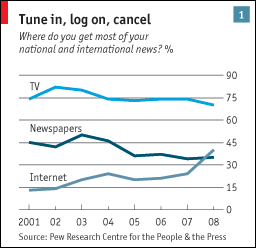
Call me old fashioned, but I’ve always liked the pre-Internet romanticism of reading the paper, opening it up with the dramatic movements of an orchestra conductor, scanning through the world’s personal log of events, and placing it neatly under my cereal bowl for further inspection. I get it, though: no one has time for such an extended, ceremonious process anymore. We’re a generation of multi-taskers. And it is much more difficult to check your email, Facebook, Twitter, and whatever you might be actually working on, while having sections of the paper sprawled around you, than if you were just opening another tab on your Internet screen. So, it is really no surprise that, in 2008, for the first time, more people said they get their national and international news from the Internet than from newspapers (see here, for more stark statistics on the newspaper’s future). The issue is not just that one day I’ll have to permanently adjust my eyes to reading from a screen, or work on not spilling Reese’s Coco Puffs on my laptop, but that online journalism has opened a huge can of worms for the question of citizen journalism, redefining who can deliver the news, how they do it, and who checks for veracity.
The Rise of Citizen Journalists

A 2003 seminal report entitled “We Media”, defined citizen journalism as the concept of members of the public “playing an active role in the process of collecting, reporting, analyzing, and disseminating news and information.” To be sure, citizen journalism is a flawed term. Professional journalists are citizens too, and non-citizens are also included in the debate. I’m not interested in discussing issues of semantics though—there are bigger fish to fry.

With the rise of online journalism, barriers to entry in reporting have completely collapsed. JD Lasica classifies media for citizen journalism into the following 6 types: audience participation, independent news and information websites (ConsumerReports, The Drudge Report), full fledged participatory news sites (NowPublic, OhMyNews, DigitalJournal), collaborative and contributory media sites (Slashdot), other kinds of “thin media” (mailing lists, email newsletters), and personal broadcasting sites (KenRadio). We can disseminate knowledge with the click of a button to not just our friends but to a whole breadth of previously imaginable contacts. This sort of access gives the idea of “disseminating information” a new dimension—and puts it in the hands of new agents.

To paint a more concrete picture for you, on the one hand we have every self-proclaimed Matt Lauer or Katie Couric, pontificating, venting, broadcasting, divulging, transmitting, interfacing, editing, applauding, degrading, commenting, “liking”, tweeting and twatting from the comfort and privacy of their own (or probably their parents’) home, in others’ sites or in their own created blogs. On the other hand, there are the true over-achieving, multi-tasking David Lats and Steven Brills of the world, who initiate and conduct a public service by providing new channels of diversified information for more specified audiences, on the side of their everyday lives and careers. [And, at the very second I was going to move on to my next paragraph, I got an email from the Master of Pierson College, of course, informing us that he too has started a blog for his “hotlines.”]

What does this all mean? Journalism can no longer be defined by appealing to the medium (i.e., print, television, radio) or the basic notion of “disseminating information.” We need more concrete standards for distinguishing between the amateurs and professionals.

Haves v. Have-Nots

One way to peg down the legitimate reporters could be the “reasonable person standard”—who would we reasonably argue to be sharing news for the purposes of informing the public at large. This seems like the easy way out, so I’ll dig a little deeper. What factors constitute journalism? First, there is content. We could outline our standards based on whether the information reported is a matter of public concern and important for our understanding. This yardstick might put some entertainment sites in danger. Would Above the Law’s “Hotties Contest” qualify as public concern? Just about every article on Gawker might fail this standard [visiting the site for the first time, the first article I saw was “Kristen Stewart’s wild ‘thrusting’ almost ruined Twilight.” Interesting?] What about FAILblog of other funny blogs? Even if these subjects constitute “interest” for some people, just about everything might be interesting to someone.

Another factor we could consider is truth. Is the supposed “news” accountable and reliable? Has it been fact-checked? Again, entertainment and gossip sites might run into trouble with this standard. Moreover, it is questionable how much we can even trust printed news especially because nowadays, their sources come from the same place as the sources for blogs—Twitter and Facebook (as we saw in the Twittering the US Airways Plane Crash and the Notre Dame student articles).

Similar to truth, a third factor may be having an editor. Putting an intermediary between author and reader not only creates greater accountability, but also gives journalism the perquisite of an elevated discourse among intellectuals. It would imply that a certain degree of expertise is required in the news-reporting process and, most likely, an affiliation with a recognizable news entity.

None of these factors by themselves or even together, seem satisfactory. To me, the best way to define journalism would be by instituting an “intent” standard, similar to the one Georgetown Law student Laura Layton proposes. If your original intention was to gather news and present it in a manner that the public would acquire information then, congratulations, you’re a journalist.If your intention did not exist at the beginning of the news gathering process then it is a bit more questionable (see Von Bulow v. Von Bulow, 811 F.2d 136 2nd Cir. 1987). Sometimes you would not know that a story is in the making until after you acquire the information. In these cases, a more thorough analysis of the other factors, as well as the means and ends of the story are in order. In any case, we should err on defining too much as journalism as opposed to too little. As we saw several weeks ago, the 1st amendment is a sensitive issue that is best not messed with.

Shielded by Shield Laws?

Again, I am not interested in matters of semantics. The way we define journalism is not important because having the title is just kind of cool, but because it comes with certain privileges. We cannot imagine the White House opening the doors of its press conferences to amateurs and professionals alike. Most notably, there is legislation designed to provide a news reporter with the right to refuse to testify as to information and/or sources of information obtained during the newsgathering and dissemination process—we call that “shield laws.” This is akin to the attorney/client confidentiality privilege or the doctor/patient privilege (although, maybe not for MJ’s doctor). The point of these laws is to encourage open communication so that reporters can better do their job of informing the public.

As of now, there is no federal shield law (despite a bi-partisan bill called the Free Flow of Information Act introduced in 2007 and passed by the House in 2008). [Friends at the YDN: Court’s have already found that student journalists are covered. You’re safe.] State shield laws vary in scope and Hawaii is the only state to specifically include whether bloggers are protected by shield laws. Their conditions hold that: (1) the individual invoking the privilege regularly participates in reporting or publishing news of significant public interest, (2) the person holds a position similar to a traditional journalist or newscaster, or (3) the public interest is served by extending the protection of the statue.

Why do we need to limit the scope of privilege at all though? Why can’t a shield law apply to all citizens if we can, seemingly, all report? Floyd Abrams stated, “If everybody’s entitled to the privilege, nobody will get it.” In other words, the court might be able to find counter-veiling social interest in almost all cases if Joe-blogger releases high priority information, ruining it for the rest of us. This is because the societal interest will almost certainly be greater than the interest of you expressing your personal thoughts and feelings on the Internet. Moreover, we see some natural limits in scope. If their skin is not in the game, so to speak, people can saying anything. If someone had ousted Valerie Plame Wilson on Facebook, they would almost certainly be required to disclose their source. They are not a journalist, just an idiot. This is where privacy and journalistic privileges might get a little fuzzy. But, to me the most important reason for limiting its scope, is to preserve some semblance of legitimate media. We need to (i) incentivize the open flow of information and new sources of media while (ii) maintaining the integrity of valuable news.

The following three cases better illustrate how this plays out in practice:

  1.  Remember Jason Chen? Someone found an iPhone prototype at a German Bar in Palo Alto and sold it to Gizmodo who did a story and video report with full disclosure about the new generation of iPhone. Police then raided the bloggers home, searching his computer files to determine if they could put together evidence of a felony. Such a search upon an ordinary citizen seems outrageous, but it is even more unthinkable if it happened against a news organization. [If you did not see John Stewart’s take on the subject, definitely check it out here.] And, in this case, it seems clear that Gizmodo was intended as a source of news. If shield laws do not apply to Gizmodo, which is owned by Gawker Media, then Lat should watch his back.
  2.   Too Much Media LLC v. Hale: Up against defamation and libel, Shellee Hale, a blogger on a campaign against criminal activity in the online adult entertainment industry, was not protected by the shield law because her posts about the software company TMM, were determined to be “nothing more than rants and complaints about her opinions, rather than the dissemination of truth and news.” This court dismissed the “intent” test arguing that, instead, the shield law requires a link to news media, and the New Jersey statue defines the term. While I still think the “intent” standard, along with the other factors discussed above, could have been employed, I agree with the Court’s decision.  Hale argued that her blog was the “Wall Street Journal” of porn. Still her statements were made on a third party site without ever contacting TMM’s representatives for their side of the story. Nothing in Hale’s actions or comments resembled the activities of a legitimate media reporter. If we narrow the scope of shield laws we can incentivize true journalists to meet a quality as well as an accountability standard—something that will certainly be valuable for the purpose of news.
  3. Glik v. Cunniffe, 655 F.3d 78 (1st Cir. 2011): In this case decided in September 2011,a federal court ruled that recording public officials, including police officers, are protected by the 1st Amendment. This decision marks a new open-mindedness in regards to citizen journalism and demonstrates the value of other sources of information that meet a reasonable standard of news.

Extended protections to citizen reporters might further instigate the proliferation of these forms of journalism. This calls for a brief cost-benefit analysis. What could “bad” citizen journalism, or “good” for that matter, be hurting?

Cost-Benefit Analysis

Conclusion and Looking Forward:

Citizen journalists are on the rise. We must implement some standards to both widen and regulate who is protected by certain journalistic privileges. Citizen journalism has costs and benefits. But it is possible to work on mediating the costs. Future challenges will include considering how to encourage better signal-to-noise ratios so that random comments—the ass lobster aficionados—do not drown out the substantive ones.

Increasingly, indicators of quality will matter. What will the peacock’s tail of journalism be? First, the ability to concentrate on analysis more than simply reporting stories. Second, enabling conversation around stories so that they truly become alive. And, third, differentiating products for particular audiences. I predict that soon new business models will emerge for both the blog-phobes (those overwhelmed by too much content) and blog-feens (those who want to participate). People will gravitate to communities they feel more comfortable in. Subscriptions will be introduced as the value of these connections and communities become more conspicuous.

Now, quick reality check: Only 1/8th of the total population get their main news source from the web. They make up about 2/3 of regular users and more than half of the readership of blogs. They dominate social network sites (see more statistics here). At the same time, there are 7 billion people in the world, and about 2 billion are Internet users, or a little over a 1/4th. So, if I’m doing my math correctly (and there is no guarantee that I am), we are talking about 1/32 or about 3% of the world’s population that read news on screens. Surprise? Not quite. If you believe the World Bank (I don’t), more than two billion people are poor—those would be hard-pressed to spend cash on Internet connections of any kind. My point is just that we have yet to fully realize the full potential of the web as a channel for news, whether those that fill the channels are professionals or not. Everyone, chill out—we still have time to figure out how to tailor online and citizen journalists, to help them be fair, accurate, and useful, before some catastrophic pre-mature demise of print news.

Privacy? – by “William Smith”

-“Oh man, what if there were an app that you could help you find your friends in the city and meet up with them?”

-“Sounds like a good idea”

-“We should make it.”

-“Yeah we should. “

Unfortunately, Apple beat me and my friend to the punch (along with many other apps), and we weren’t able (read: too lazy) to develop the app that is now known to iPhone users as ‘Find My Friends’. But it wasn’t long after ‘Find my friends’ debuted that controversy bubbled to the surface regarding its use. Apparently this tool can be used for all sorts of nefarious purposes like stalking and catching one’s wife having an affair. Who could’ve seen that coming? True, in the “find my friends breaks up a marriage” case the app was installed without the iphone user’s knowledge, but the idea that people would in most cases voluntarily make known their location at all times poses some startling risks. Chief among them letting people know you’re not home and should they wish to rob your home of all your belongings now would be the perfect time to do so.

Apps like these also pose new threats to criminals who, before location services, check-ins, and gps, were able to create steel trap tight alibis can now be tied to their crimes by a simple check in. Imagine foursquare bringing someone to justice!

I suppose in these times of rapidly developing technologies, criminals and those more straight laced in our society must both adapt our thinking to match reality. The fact of the matter is that things that were once private simply aren’t anymore. Things that once took an egregious amount of time to discern about a person can now be analyzed and determined within seconds. And in some cases information we would never expect for someone to see can be intercepted without us having even the slightest clue. For most of us, we have no problem with google knowing every website we’ve ever looked at in chrome. We see incognito mode as a feature reserved only for those lonely late nights where we venture to sites which will one day soon end in “.xxx” (totally SFW).

We all laughed in class when Brad showed us the hilarious Onion piece about facebook being a CIA operation, but does the laughter stop when we realize that the information we put up about ourselves is in fact poured over by CIA analysts? Are practices like that simply in the interest of keeping America safe? Is this the price we pay for wanting to use services like facebook, twitter, and foursquare? Is that price reasonable? These are all questions I’ve answered for myself, but ultimately it doesn’t matter what I alone think. There’s going to come a day on the internet where we accept as status quo that everyone can see everyone.

I’ve had many a conversation with people at parties where the gist of the conversation is that should any of us ever run for office we’ll be ruined by what we did as teenagers and young adults. I always counter with the fact that the people who will try to expose what we did as kids will have just as horrifying things about them on the internet and that at the end of the day that great equalizer that is embarrassment will override the internet’s permanence. Or I could be wrong and we’ll all just end up like this guy

10 Things I Hate About Wikipedia – by “Sam H”

Ahh Wikipedia. It’s hard to imagine life without immediate access to understandable answers to the world’s toughest questions. Why is the sky blue? Why is grass green? What is the meaning of life?

(Warning: gratuitous Wikipedia links continue below)

Many of us depend on Wikipedia for all aspects of work and play but, admittedly, it has its flaws. Still, Wikipedia manages to be one of the most visited sites year after year. What keeps us coming back? Is it an addiction to an ever-growing content base and cordial user community? Perhaps a primal urge to voraciously consume and produce knowledge?


Wikipedia Problems = First World Problems?


Are the problems of Wikipedia solvable? Many have been greatly mitigated but have yet to dissapear. As you continue your Wikipedia editing/using career, here are some issues to consider as the network grows.


10. Abuse and Vandalism in Articles

This slots in at 10 as the community controls and norms in place continue to make this less of an issue. Still, if Stephen Colbert believes in change on Wikipedia, it might just happen. Edit wars are still fairly common and can get nasty. While most of the time, users do seem to be acting in good faith, it isn’t always the case.

As the user base continues to increase and people and machines get better at monitoring and fixing abuse, the prospects continue to brighten!


Colbert
Wikiality and Truthiness for All


9. Censorship

Just because content isn’t centrally created and distributed, doesn’t mean it can’t be blocked or censored. And if anyone can edit Wikipedia, the government and private enterprise can edit Wikipedia. While censorship across different types of content and distribution methods is certainly a concern, the right to access factual information is becoming a more pervasive human right. Because of the nature of Wikipedia’s content, any obscenity or other censorship argument is weakened. Expect Wikipedia to remain at the frontier of free information.


8. Neutrality

I know. I know. It’s better this way – presenting facts and the facts of others’ viewpoints but I wish just once we could shake things up and have an article that reads like the YDN editorial page. You can be sure that Paul D. Keane. M. Div ’80. M.A., M.Ed. PS would be very vocal on the discussion page and trolls would abound.

The Neutrality standard, like Abuse and Vandalism above, has continued to be upheld more effectively through norms, moderators, and technological infrastructure. This is no easy task, especially in the case of articles involving current events or controversial issues or both. Like Abuse, this issue is unlikely to be wiped out completely, but its adverse effects are generally felt minimally by Wikipedia users.


Controversial and current! (xkcd.com/545/)


7. Time Waster

Ok, maybe it isn’t as bad as StumbleUpon or Google Reader, but Wikipedia can really eat up time. This is true for both editing and reading; all those in-text links are just so appealing.  On the bright side, you can’t help but feel like you’re learning something. It just isn’t always clear exactly what you’re learning.


6. Not In Paperback

Call me old fashioned, but nothing gets me up in the morning like the smell of leather bound books and rich mahogany. In spite of the efforts of a brave few, it seems unlikely that Wikipedia will be in paperback any time soon. Aside from the obvious factor of not looking like a stud/studette when you pull the Aa-Ac book of encyclopedia brittanica of your knapsack, with Wikipedia you can’t easily see what comes alphabetically before Aardvark!  Fortunately, there’s still the “open the book to a random page and read game” for the 21st century. The benefits of having everything dynamic and on the interwebs is that it can better keep up with our rapidly developing knowledge base. Also, it’s free and available to way more people. Plus it’s packed with way more information (from way more sources). Oh my! I’ll take that tradeoff any day.


5. Incomplete

Have you ever been devastated to discover a mere stub article  on Wikipedia when beginning to write a paper? Or worse, “The Page Does Not Exist” Search Result of Doom. In spite of the concerted efforts of many, the impressive information trove of Wikipedia remains incomplete. As our information gathering continue to outpace our information synthesis, this issue is unlikely to end in the near future. However, that makes the fight even more worthwhile. Similarly, arcane topics in Wikipedia can often be overlooked due to lack of interest or lack of people knowledgeable on the subject. This can create articles strongly influenced (and biased) by certain groups or no article at all. I mean, who uses 29Si NMR these days anyways?


The task at hand is great; the rewards, immeasurable.


4. Innacurate and Untrustworthy

I had to include this as these charges are often levelled at Wikipedia. Fortunately, there is much evidence to suggest high accuracy (roughly comparable to the oft-praised encyclopedia brittanica in science matters). Of course, certain newer articles or articles with less well-known topics  will be of lower quality but they likely aren’t even included in encyclopedia brittanica. Should you need more convincing, I recommend the people of yahoo answers.


3. Free

Have you ever heard the expression “you get what you pay for”? Wikipedia is free so might it not be very good? There’s no advertising and no fee-per-use/subscription fee (Spotify?). Too good to be true? There must be a catch you say? I got it! They want you to contribute money and/or time (voluntarily). That doesn’t sound too bad actually (at least to me). Well done, Jimmy, Well done. But still, be a conscientious consumer of the information you get on Wikipedia. Not everything on the internet is true.


The Man. The Legend.


2. Formatting

There’s definitely something reassuring about the same format, color scheme, and everything on Wikipedia, but sometimes you just want something new and eyecatching.  Sure, there are skins and other websites you could be browsing, but why not be exciting like facebook and change your features and layout every two days? It seems to be working for them. I guess for now we’ll have to live with the search box on wikipedia boringly and predictably sitting in the upper right hand corner of the screen and take the changes we can get.


1. Research Papers

What’s the first step of starting an essay? If you answered D) search the topic on Wikipedia, you fall into an ever-growing category of people/college students. Somehow, it still isn’t okay to cite Wikipedia. I guess we should go and check the information in the original source, but then does that count as original research? Moral, legal and ethical dilemmas are everywhere! Not to mention, why should I write a brand-new reasearch essay on Abraham Lincoln when there’s already a good one here? Wouldn’t it be better if I improved that one or used that as a starting point?


We’re unlikely to see citing Wikipedia as your main source of information become academically acceptable any time soon. That doesn’t mean it isn’t helpful – it sets up an outline for you to better understand the topic.  In conclusion,it looks like EasyBib will be around for at least a few more years and college students everywhere will be forced to research beyond Wikipedia.


Wikipedia and You

In spite of all these grievances, don’t forget one thing! Wikipedia is, in fact, the best thing ever. It makes lives better, easier, and more interesting and demonstrates the immense power of a norm enforced  collaborative network of people with common values. So go have fun and make the world a better place!

The Internet as a Militia – by “Joshua E”

The Bill of Rights was not a guarantee of individual liberties. Rather, before the Fourteenth Amendment came along and everything went to hell, it was better viewed as a limit on the despotic potential of a centralized government; a potential that terrified the founders of our Constitution. Thus the First Amendment was a guarantee that the national government would not suppress assembly, speech, and the political discourse necessary to oppose tyranny. Thus the Second Amendment was a guarantee that states could hold militias in order to resist with force an oppressive government. Of course I am oversimplifying a very complex and contentious debate, but allow me for a moment to make a logical fallacy. This guy agrees with my view of the Bill of Rights:

So obviously I’m right. Let’s just leave it at that. I apologize for the many Yale words in my opening paragraph.

I, like Jack Balkin, am interested in how the development of the Internet changes the role that the Constitution has in our current society. Balkin focuses on the oppression of free speech by private companies, and how unable the Courts are to provide meaningful protection in this area. He believes that fighting technological infrastructures, business models, and social practices with well-crafted laws is the way to protect our liberties. He believes that the Internet has fundamentally changed the Bill of Rights’ ability to protect us from government (it’s original purpose, as outlined above), and therefore we must look extra-judicially to protect our rights.

The pacifist in me wonders whether the Internet landscape has also fundamentally lessened the necessity for militias, and other Constitutional protections against an abusive government that attempts to limit our free speech. Due to its interconnectedness the Internet is extremely difficult to regulate (though not impossible). In the past if a government wanted to quell speech, they had pretty effective means of doing it. Books can be banned or burned. Radio communications can be jammed. Protests can be broken up. The Internet is a whole other animal. Because it is generative, it allows people to circumvent many of the ways in which a government might try and limit access to certain material (for example by the use of proxies). In this way, I believe it acts as a check on the government. When the government gets out of control, the citizenry does not need to revolt using militias, they can simply tweet about it. Despite the fact that the following governments do not share the same Constitutions as we do, nor necessarily the same values, some examples from around the world will I think be illustrative.

Russian Coup

In 1991 leaders of the Communist Party in Russia led a coup against president Gorbachev. The leaders struck while Gorbachev was on vacation, and they hoped to expand support for their cause by limiting the flow of information to the west and most importantly to their people. They censored both news and phone links to the west. Television played nothing but operas and old movies. Their strategy would have been effective, except for one main flaw: Relcom.

Relcom, an acronym for reliable communications, was a basic computer network that Russia launched in 1990. Though Relcom was a purely e-mail network at the time, it still had the power to undermine the government’s efforts to suppress the free flow of information. Those who opposed the revolution were attempting to distribute a decree by Boris Yelzin which attempted to inform the public of the coup and what was happening. Without Relcom, they would have had to scour the city for available photocopiers and distribute copies by hand. Instead supporters simply sent a copy to one of the Relcom founders who was able to copy and distribute the decree.

Furthermore, Relcom aided in the information flow from the West into Russia. One California professor would listen to the radio in America and take notes on what American newscasters were saying. Then, he would type a summary into an email and send it through Relcom to supporters in Russia who would distribute the information. A similar practice occurred between Denmark and Russia, providing the Danish perspective on what was happening as well. These reports, in addition to eyewitness testimony circulated through Relcom gave citizens on the ground a relatively accurate picture of what was going on, and allowed them to resist.

With such an omnipresence of information, the rebellion didn’t stand a chance. The Coup lasted a mere two days.

Kuwait Invasion

Also in 1991, Iraq invaded and occupied Kuwait. After a decisive victory by Iraq, Saddam Hussein installed Alaa Hussein Ali as the Prime Minister of the “Provisional Government of Free Kuwait”. Kuwait was hardly free, however. Most forms of traditional media were cut off, severely limiting Kuwait’s ability to communicate with the outside world. But like in Russia, the Iraqi strategy had one main flaw: IRC.

Internet Relay Chat (IRC) is a way of real-time chatting through the Internet. Traffic to IRC skyrocketed during the invasion, because it allowed people who could not escape Kuwait to communicate to the outside world for a good week after traditional media was cut off. These communications in conjunction with the efforts of those that had fled Kuwait, rallied international support to condemn the actions of Iraq, eventually leading to the Gulf War.

So, yes, violence was necessary to expel Iraq from Kuwait. But what I find interesting about this situation is that it was not necessarily internal military force from Kuwait that allowed them to succeed. Rather, the Internet, and IRC, allowed the free flow of information throughout Kuwait and throughout the rest of world, allowing Kuwait to get the support that it needed.

These IRC communications are stored to this very day, and can be seen here.

To the future

The two examples given notably come from twenty years ago. Our world, our Internet, and our governments have certainly changed. Now, as alluded to earlier, oppressive governments have developed tools to prevent the free flow of information on the internet. I’m not going to pretend that I understand the technical means that a government could use to limit connection through the Internet, because being a humanities geek I don’t. But if I had to bet on who would win in a fight, government computer science experts or lulzsec hackers, I would probably choose the lulzsec hackers.

We live today in an intellectual world. This is why militias are nonexistent in America (yes, Sarah Palin and the like still carry around firearms, but in the case of actual government tyranny I question how effective ragtag gunman that can see Russia from their houses will be in fighting our national army). Our weapons against governmental oppression of free speech are not guns, but rather speech itself by means of the internet. I am a firm believer than the pen is mightier than the sword. When our government was created, the Founders allowed for militias and similar protections because a tyrannical government had the power to suppress the pen. With the advent of the internet the government no longer has that power. The Internet has become our militia in the fight against governmental despotism.

From the Outside Looking In- A Complex Relationship with Meme Culture – by “Nick L”

But I'll try anyway!

The Inside Joke

  In high school I was never the first to discover a new online fad. I refused to touch MySpace, I was reluctant to join facebook, and I rarely used the internet as a source of culture. For me, the internet was a tool for tracking my favorite sports teams and playing the occasional online game. This was not an issue for me socially, and I generally felt like I was a culturally informed conversationalist.

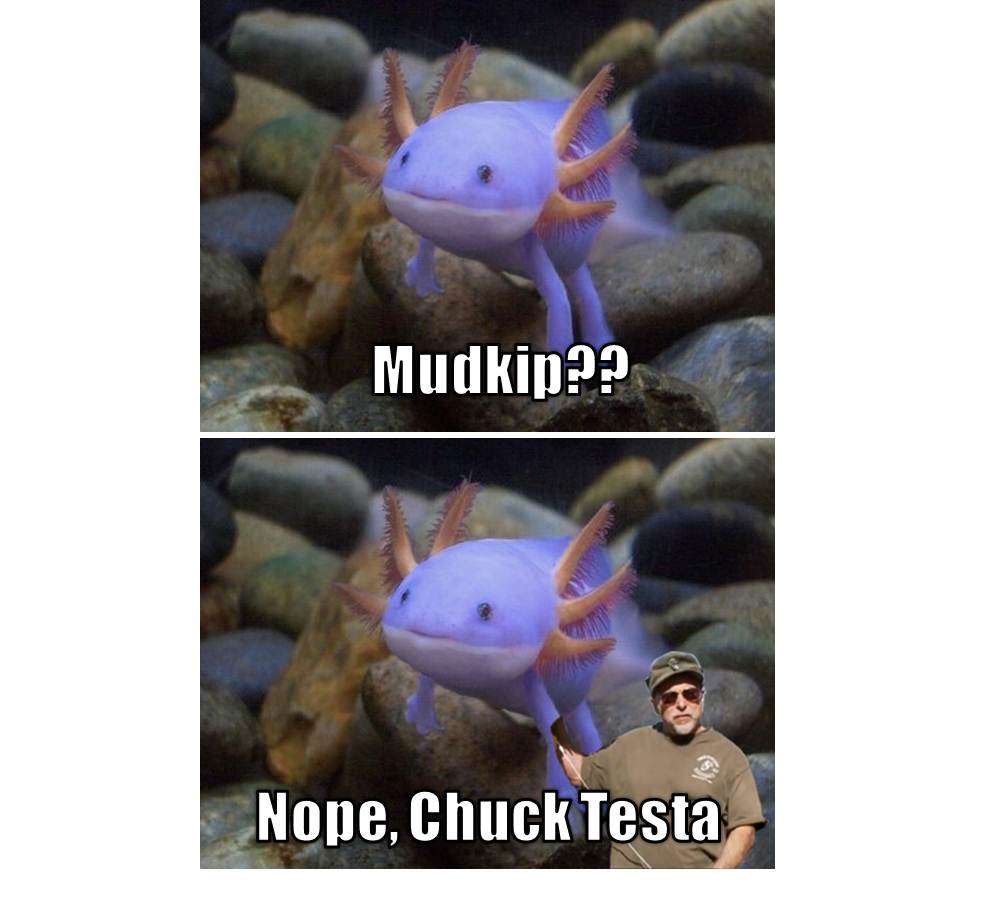
Then, all of a sudden, I was lost. One night, casually relaxing and watching a football game, it was like my friends began speaking another language. Every other sentence I heard made absolutely no sense, and I found myself irritated and exclaiming, “What the hell is a mudkip?!?!” Of course, my confusion merely encouraged my friends to delve deeper into their newly-discovered language. They were laughing hysterically, uttering nonsense, and I was sitting there wondering what drug they had taken that made their ramblings at all amusing. I was experiencing absolute awkwardness: being the only one in the room on the outside of a massive inside joke.

Finally, someone threw me a bone. “Memes, Nick! Haven’t you ever been to 4Chan??” I remained clueless, so I spent the rest of the night smiling and nodding, pretending to be totally into the senseless humor. But I didn’t dare try and use one of these ‘memes’ they were so fond of. I simply followed along. They say a dope will laugh 3 times at a joke: First when the joke is made, next when the joke is explained, and finally several minutes later when he actually catches on. I was stuck repeating the first two steps over and over again.

I heard you liek taxidermy?


Meme Culture

Kenyatta Cheese of Know Your Meme would probably have labeled me a civilian. At the time, I would have labeled myself a victim of a silly fad. The role I was playing, though, was an integral one. In order for an inside joke to be successful, there must be an outside, a group whose ignorance makes the humor all the more entertaining. Whatever one might call my role, the situation forced me to reconsider the relevance of internet-based culture. I needed to decide whether or not to buy in, do my research, and become an insider in the growing fad.

In his book, “The Selfish Gene,” Dr. Richard Dawkins, British ethologist and evolutionary biologist, defines memes generally as “tunes, ideas, catch-phrases, clothes fashions, ways of making pots or of building arches.” He goes on to explain how memes propagate themselves culturally and how a so-called “meme pool” behaves in quite a similar fashion to the “gene pool” with which we are more familiar. From Dawkins’ description, memes are brought to the forefront as an important tool in social progress. As much as our genetic code determines our physical being, our memetic code, comprised of outside factors, should define the culture in which we live.

The issue in Dawkins’ logic, however, is revealed by the dissonance between theory and reality. In theory, memetics is a serious study, with such topics as the “God Meme” which pose real academic questions and spur debate. In practice, though, the idea of the meme has been embraced by a population that has a different intention in mind. Memetics has become – as the popular meme goes – simply “4 the Lulz.”

well that and for the cupcakez...

Internet memes are just one more way of keeping the internet user-created. Instead of simply accepting the mainstream humor provided by the ‘professionals,’ the creative and clever use memes as a new kind of comedy. (Francesca Coppa would certainly approve!) And memes aren’t always just passive time-wasters. Some memes, like planking and cone-ing, require time and effort. However pointless these activities may seem, they provide entertainment for those who are in on the joke, and the efficiency of the internet as a sharing tool allows the fads to grow to massive proportions. Just watch a couple videos and you’re guaranteed to at least get a chuckle out of them.

Downside?

  While Lolcats and planking are mostly harmless, memes can certainly have a more negative side as well. Take trolling for instance. Trolling is behavior which is meant to anger or frustrate the object of criticism. When so-called “trolls” decide to gang up on a certain online figure, the mocking and degrading attacks often become excessive and cruel. In the case of Jessi Slaughter, we see an example of trolling having a real impact outside just the cyber-world. Enjoyment by the trolls came at the expense of a little girl who quite clearly had enough developmental issues of her own before harassing phone calls and comments came into play. Whether or not Jessi Slaughter deserved criticism is up for debate, but I think most would agree that the outcome of her situation was regrettably worsened by the online community.

Copyright

One more interesting wrinkle to mention is copyright law. It is clear that US regulations allow fair use of certain media for the purpose of parody, but this right does NOT extend to satire. The “Downfall- Hitler Reacts” meme is often in direct violation of this code. The example here is fair use because the editor is making a statement about the film and its production company. However, the endless re-edits of this clip to mock everything from Xbox Live to Justin Bieber are actually in the realm of satire. They critique society as a whole, not the piece itself, and for this reason they are in violation of a copyright.

Final Thoughts

-Memes are funny, it only takes a few minutes on any of the various meme databases to realize that silly (but clever!) viral humor is entertaining

-Meme culture is not necessarily an effective use of time, but hey, neither are most of our extra-curricular activities.

-Sometimes the online community goes too far, and the anonymity which we hold dear to us is often the enabling factor.

-It is MUCH more fun to be in the know in an inside joke than to be left in the dark, so I put in my hours of tedious studying and I believe I can now claim to be a participant in a really fun and witty new realm of humor.

Memes and Online Communities – BFF! – by “Nikola C”

Memes do not create themselves. They do not “evolve.” Communities create and mutate memes, and communities provide the natural selection that perpetuates or puts them to an end.

Meme History 101 – Memes and Online Communities go back a long way

In the beginning (1985), there was the Internet: The Internet. The Meme-Rex. The word was first used to describe “The linked computer network of the U.S. Defense Department.” It is the shorthand for Inter-network.

And on the 1982’nd year AD, William Gibson created Cyberspace…

According to popular consensus, the most successful internet-meme of all times (other than the Internet itself) is the word “Cyberspace.” The word was first used by the person who has perhaps the most significant cultural impact on, well, cyberspace – the sci-fi author William Gibson. He coined the phrase in his famous short story “Burning Chrome” in 1982. The Cyberspace meme was later immortalized by Gibson’s 1984 novel “Neuromancer”. This novel is the first one to ever win the science-fiction “triple crown” – the Hugo Award, the Philip K. Dick Award and the Nebula Award, which is greater than or equal to infinite epicness.

A consensual hallucination experienced daily by billions of legitimate operators, in every nation, by children being taught mathematical concepts… A graphic representation of data abstracted from the banks of every computer in the human system. Unthinkable complexity. Lines of light ranged in the nonspace of the mind, clusters and constellations of data. Like city lights, receding.

~Neuromancer

I think it is fair to say that the “Neuromancer” novel is itself another early, immortal meme, but it is not as popular in the Internet mainstream as LOLcats for example. Anyhow, the whole universe created by Gibson inspired many of the members of early online communities. Somehow, he successfully turned a monochrome terminal with a blinking cursor into a portal to a romantic world full of adventure.

The Internet Coke Machine:

The “cultural soup” of the early Internet apparently had a peculiar flavor, because another popular meme of the early times was the Internet Coke Machine in CMU. Basically, a bunch of caffeine-hungry computer programmers hacked the Computer Science Department’s Coke Machine, so that they could see if there is any cold “happiness in a bottle” in it without having to go out of their offices. It could also tell them which bottles of coke were best cooled. And all this could be done through this early meme-line-of-code:

> finger coke@cmu_

Cheers.

Bytes’ got temper (-:

                According to Internet Lore, the first emoticon was used in a message sent by Scott Fahlman on 19th September 1982. There was a large discussion of whether emoticons are really necessary – after all neither Shakespeare nor Milton needed to use them. It is 2011 now, however, and we still use smiley faces everywhere. So, as the poet has said, when Natural Selection speaks, debate champions should remain silent. Here is the message (the smiley faces are composed entirely of ASCII, but WordPress converts them to images 😦 ):

19-Sep-82 11:44    Scott E  Fahlman             :-)
From: Scott E  Fahlman <Fahlman at Cmu-20c>
I propose that the following character sequence for joke markers:
:-)
Read it sideways.  Actually, it is probably more economical to mark
things that are NOT jokes, given current trends.  For this, use
:-(

Now, our only source of this information is Scott Fahlman himself, but nobody has felt the urge to refute his claim so far, so… let it be. Ideas happen when their time has come anyway, right?

Usenet:  Usenet is one of the first remarkably strong online communities, and it gave birth to many memes still in use today. Did you know that the first recorded use of the term LOL, as in “Laugh out Loud,” was in a Usenet message from the early 1980’s? Yeah, LOL was cool way before we, current students, were born.  Some other abbreviations the Usenet community is to be held accountable for are AFK, BRB and ROTF.

According to Wikipedia, the act of trolling can also be traced back to Usenet, but back in the day it was considered to be a good thing:

“… a veteran of the group might make a post on the common misconception that glass flows over time. Long-time readers would both recognize the poster’s name and know that the topic had been discussed a lot, but new subscribers to the group would not realize, and would thus respond. These types of trolls served as a practice to identify group insiders.”

Yeah. Right. As the community evolved, trolling became tightly associated with the initiation of flame wars, and all those other things that would make people on the internet hate you.

Other popular Usenet memes were BIFF (also B1FF) – a nickname given to Usenet newbies, and it had a meaning similar to the modern “noob” – it was rather unwelcoming.

Godwin’s law – Mike Godwin observed that “As an online discussion grows longer, the probability of a comparison involving Nazis or Hitler approaches 1.” Godwin’s Law’s achieved its meme status when people started citing “Godwin’s Law” in the beginning of almost every Usenet thread they started as a “Reducto ad Hitlerum” measure – they did not want the Nazi comparisons in their discussion.

The “Something Awful” forums: “SA” was started in 1999 as the personal website of Richard “Lowtax” Kyanka, but the community that formed around its forum gradually turned into the primary foundry of internet culture. If you have heard of the legendary phrase “All your base are belong to us” it is probably because of this website.

You have no chance to survive make your time.

One of the signature weekly activities of the SA community was “Photoshop Phriday”, during which forum members, or “goons”, as they call themselves, would mash together several images for the sake of parody. Follow the link below to see last Phriday’s phinest:

Faceswap

The SA forums are also has another famous hobby – “The Blue Ball Machine,” which involved the creation of small, looping animations of random devices that maneuvered blue balls. The only requirement was that in every animation, the ball had to enter at one place and exit from another. When tiled next to each other, these animations create the illusion of a gigantic mechanism, and they feel as if they are synchronized to the “Pee-wee’s Big Adventure” theme.  Check it out:

The Blue Balls Machine

Max Goldberg, the creator of the “You’re the Man Now, Dog” website – a portal responsible for the popularization of many of the memes of the early 2000’s said in an interview for Wired that “[The Blue Ball Machine] is our most viewed title ever.”,

The SA community created many of the most epic memes of the early 2000’s. In late 2003, one of the goons – moot, would take the online community scene to a whole new level.

4chan.org – 4chan was launched in October 2003 by Christopher ‘moot’ Poole. The website was designed to be an anonymous image exchange forum, with Anime and Manga as its main topics. It gradually turned into one of the most successful meme-factories and online-activism hubs on the internet

So, how did the 4chan community change the world, besides voiding thousands of people of respectable amounts of their mental innocence through /b (also known as the “Random” thread – the community’s most active and controversial board)? Well, some of the most famous memes today originated on 4chan. “Rickrolling”, “LOLcats”, “Caturday”, Tay Zonday’s “Chocolate Rain”, “Pedobear”,” IMMA CHARGIN MAH LAZER” are a few of the popular ones.

I iz in ur class. Eatin ur cupcakez.

There are some other memes that are specific to the 4chan community, but I will not mention them here, for /b reasons.

Many factors that contribute to 4chan’s title as the world’s leading meme factory. While it is not exactly clear what these factors are, I think it would not be too wrong to point out the large number of people in the community and the specific mechanics of the board.

4chan is an image exchange forum, and each thread contains images on a certain topic – Anime, Cars, Weapons and so on. However, not all images that are posted are retained. Once you visit a thread, you can move up to 15 pages back in its history. This, combined with the large number of users posting to threads like /b (Random), makes it rather hard for a certain image to stay within the 15 page range for too long. Online communities create their memes, but they also play the role of Natural Selection for their ideas. Natural Selection in 4chan is pretty ruthless – it is easy for an idea to be sent to the junkyard. Memes survive only if they grab the attention of a large enough part of the community, and the ones that do, like the “LOLcats” one, are often destined to be successful even in different environments than the ones that created them.

YouTube: The third most visited website on the Internet is the home of the majority of the video-memes out there.  “Charlie bit my finger”, “Nyan Cat”, “This is Sparta!”, “Numa Numa”, and ”Obama Girl” are just a few examples.

Nyan Cat

What is interesting about YouTube is that often, unlike other online communities who develop their memes, many memes on YouTube were not developed specifically for the YouTube community. Rather, they become memes only after they are posted to the site – like the “Star Wars Kid” and “Badger Badger Badger.”

Honorable Mentions:

Gaming communities: MMORGP’s, StarCraft2, FPS-communities and so on also produce and perpetuate their own memes. Some examples:

StarCraft2: “Idra: GG”

World Of Warcraft: dancing characters

Counter-Strike: “Headshot!”

Unreal Tournament: “Double Kill… Multi Kill… Mega Kill… Ultra Kill…”

Also, warez servers – Where do you think video-memes were stored before YouTube? The local warez was the only place to find the 3D Dancing Baby video. Also, the terms “leecher” and “seeder” started there.

The end:

This list is not exhaustive at all. I wrote it just to illustrate how different communities and memes evolved over time.

All the examples cited show that Richard Dawkins’ theory of memes as “survival machines” seems to be able to hold its ground. The three factors needed by a survival machine – reproductive potential, ability to mutate, and longevity have all been demonstrated to a certain degree by the memes above. For example: Smiley Face – Viral: Very; Mutable: Very; Longevity: High – still a meme? – Yes. Internet Coke-Machine: Viral: Very; Mutable: Not too much; Longevity: The coke machine was probably scrapped already; still a meme?

I think the answer to the last question is a little tricky. Is the Internet Coke Machine meme dead forever now? And what exactly should we mean by longevity, when applied to memes? Dawkins suggests that “is probably relatively unimportant,” but I think it could have some practical applications if interpreted correctly. While I was writing this blog post, I told several engineering-inclined people about it, and they were very amused and liked the idea a lot. Maybe we can employ longevity to be the distinction between and the factors that cause memes to be active or inactive. After all, many interesting ideas of the past are still interesting today – we do not need to look for Polaris to find where north is, and the knowledge of how to wield a sword is not quite essential for our survival nowadays, but in the right communities, these memes are still active.

When, and do memes actually die? Perhaps it is fair to say that memes materialize within and disappear with their communities. Until they find a new home.

There are many questions that need to be answered about memes, but at least we get more and more examples on which to test our theories.

Think Different. – by “Marty B”

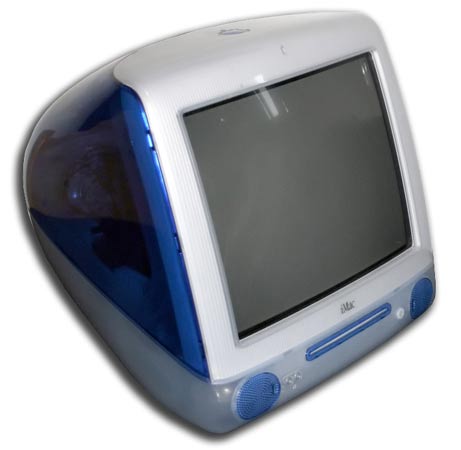
From the first time I saw an iMac in my elementary school’s library, I’ve had a tortured relationship with Apple.  Although I’m not a coder or a computer science expert, I’ve always felt a connection to the culture of remixing, open-source, free-software, etc. (I think a lot of my attitudes towards the internet were shaped by my introduction to Napster in the late 90s and torrents in the mid-2000s.  I love that shit).  But in my mind, Apple products always seemed to be one step behind the technology of the times.  And even worse, I’d always felt that Apple products inhibited innovation in the field of computing.  Computers and the internet developed so quickly in the 20th century partly because the tools of computing were concentrated in universities and among people whose inherent curiosity allowed them to continually push the boundaries of computing.  People began using computers for millions of different purposes simply because programmers had the ability and the freedom to tinker around.  Over the last 15 years, it always appeared to me that Apple products restricted the freedom of their users, thus restricting the ability of people to innovate and expand the bounds of what is possible in computing.  In fact, that constricting nature of Apple products, and the slow release of new technologies, almost seemed to be its defining characteristic.


The iTunes Store

One of Apple’s first major developments in the 21st century was their opening of the iTunes Store.  After years of legal battles regarding music downloads and the internet, Apple finally created a location where people could easily buy music for their computers and iPods.  But along with this wonderful new store came something called FairPlay, a digital rights management (DRM) technology that restricted how songs from the iTunes store could be played.  Among the limitations, the tracks could only be played on three different computers, any iPod could not have music from more than five iTunes accounts, and a playlist containing DRM songs could only be burned to CD seven times.  Most notably, songs purchased from the iTunes store could not be played any portable digital music player besides ones made by Apple.  Essentially, if you buy music from the iTunes store, you have to buy an iPod.  After huge social backlash against DRM music over the years, Apple finally released their music DRM-free starting in 2009.


The MacBook Revolution

Around this same time, MacBook laptops produced by Apple began sweeping the nation.  Although dozens of companies were producing laptops in the market at that time, Apple’s laptops had one curious characteristic: proprietary ports.  At a time when power cords had the possibility for standardization (as has been occurring lately with micro-USB devices), Apple used a proprietary connection on its power adapters.  Additionally, they used a proprietary video out connection so that, if anyone wanted to connect their laptops to a TV or projector, they would have to buy a $30 adapter.  These restrictions necessarily made Apple computers much less versatile.  The same attitude towards hardware was applied to iPods and iPhones, which charge and sync using a proprietary Apple port.


There’s an app for that…

Apple instantly became one of the most dominant competitors in mobile computing when they released the iPhone.  But in doing so, they also charted the path of their mobile operating systems: closed, proprietary, and full of various forms of DRM.  The Electronic Frontier Foundation, Johnathan Zittrain, and the Free Software Foundation have all publicly commented on the restricting nature of Apple’s mobile operating system.  But what exactly was the problem?

First, the iOS operating system itself is completely closed.  This means that no ordinary computer enthusiasts would be able to easily tinker around with the way the operating system works or looks.  In fact, when jailbreaking became common, Apple immediately went to the courts to attempt to make jailbreaking illegal (a battle they eventually lost).  In addition to closed software, the customization ability of iPhones and iPads were surprisingly limited.  There are no custom ringtones for receiving text messages.  There aren’t any widgets to customize your home screen.  Every iPhone looks and feels exactly the same.  The code prevents customization.

After the iPhone, Apple eventually released the App Store – the one and only location where iPhone users could go to obtain applications for their device.  But Apple decided to retain control over every application that was submitted to the App Store.  Eventually, they decided to start rejecting any applications that would conflict with their ability to make money.  Want to turn your phone into a wifi router for free?  Sorry, you’ll have to pay AT&T or Verizon at least $20 a month for that.  Want to access all of your music for free using Google Music?  Sorry, you need to buy all your music from the iTunes store and pay for “iCloud” to listen to it wirelessly.

In addition, Apple habitually delays the release of new technologies to make sure they can maximize their profits at every step.  One of the most egregious examples of this occurred when they released the “iPod Photo” for $500 and then released the first video iPod just four months later at a much lower price.  They released the iPad 2 two months after Christmas 2010 to maximize the number of people who bought the older technology.  Even the new iPhone 4GS that came out a few days ago still does not have 4G data (the network of the future) or an NFC chip (a technology of the future).  This slow, deliberate release of new technologies impedes development within and beyond the existing frameworks.


Apple’s Legacy

So what does this all mean?  Does this mean that Apple products have slowed down technological progress over the last 10 years?  Would the (technological) world be a better place without Apple?

Absolutely not.

If Apple devices were the only devices that you could buy, then, I would probably argue that computing and innovation would probably be hindered.  But because we have other platforms onto which coders and programmers can develop their ideas, Apple hasn’t slowed down technological progress, they’ve advanced it.

How?  Apple’s incredibly simple interface, eye-catching designs, and ridiculously effective marketing have had an unbelievable effect in bringing outsiders into the world of computers.  There was a time when the internet was pretty much just for dorks, researchers, gamers, and porn enthusiasts.  Although computing for business is one of the main reasons for its growth, Apple has brought computing into homes of everyday Americans that ordinarily would never have become involved with computers.

Apple doesn’t sell products, it sells emotion.  Ever since those original dancing silhouette iPod commercials, Apple has been making people believe their identities are tied to the devices they buy.  You can’t appreciate literature without an iPad.  You can’t preserve family memories without iMovie on a Macbook.  And I think that is the greatest legacy of Steve Jobs.  He may not have been an innovator from a technical perspective, but he was a visionary from a cultural perspective.  For people who ordinarily may never have been able to use computers, Jobs designed products they could easily use.  This has brought so many people into the field of computing that it has necessarily advanced the field, albeit in a nontraditional sense.  Sure, Apple app developers are much more restricted than Android app developers, but the sheer number of people who have begun developing apps due to the popularity of Apple has absolutely increased people’s interest in mobile computing.  They may have been on the wrong side of many legal battles involving DRM, but Steve Jobs will forever be remembered as a cultural icon: someone who created a seemingly magical brand of devices that have come to define how our society interacts with the world around it.

Where is Yale’s Zuckerberg? – by “Keila Fong”

Facebook is worth tens of billions of dollars. If its active users formed a country, it would be the third most populous in the world. The dramatized story of its founding (The Social Network, 2010), in which Harvard plays a significant role, was a critical and box-office hit.

According to a Kauffman Foundation study, “if the active companies founded by MIT graduates formed an independent nation, conservative estimates indicate that their revenues would make that nation at least the seventeenth-largest economy in the world.”

Certainly, these types of statistics are mostly just attention-grabbing ledes — they can’t and don’t really capture the state of an institution’s entrepreneurial culture. That being said, it’s unlikely you would hear similar stats about Yale being thrown around…

Make no mistake, Yale has had a number of entrepreneurial successes. FedEx (Fred Smith, ‘66), Meebo (Seth Sternberg, ‘01), Higher One (Sean Glass, ‘03), Justin.tv (Justin Kan, ‘05), and Aardvark (Max Ventilla ’06 et al.) are just a few of the companies that have been founded by Yale alumni. There are Yalies in important places in industry (e.g., the founders of General Assembly. Bing Gordon, of Kleiner Perkins). There are even more fledgling ventures on campus, in programs like the YEI Summer Fellowship. Four of the twenty four Thiel “20 Under 20” Fellows were from Yale.

However, despite these individual successes, Yale just doesn’t have the cultural clout of the entrepreneurial powerhouses — places like MIT, Stanford, perhaps even Harvard. Why not? What does it take to build an entrepreneurial culture?


Where do entrepreneurs come from?

In an opinion piece on the technology and startup blog TechCrunch, Vivek Wadhwa discusses whether entrepreneurs are born or made. He cites Fred Wilson, a prominent VC, who believes that “you can’t teach people to be entrepreneurs”. Wadhwa claims the opposite — that entrepreneurs aren’t born, but are made.

On an anecdotal level, many words have been blogged about what makes a successful entrepreneur. The characteristics seem to converge onto several recurring traits — things like determination, resourcefulness, and creativity, things that all sound pretty useful to have if you’re starting a company. Even if possessing these traits somehow didn’t predispose one to entrepreneurial success, these are the traits that the gatekeepers themselves profess to care about. By selecting founders with these traits, VCs and their ilk create a system in which possessing these traits is rewarded. Perhaps some people are born with a temperament that makes them more likely to be successful in entrepreneurial pursuits.

However, there are clearly more people who exhibit these types of characteristics than the number that pursue entrepreneurship, let alone pursue it successfully. People can be exposed to entrepreneurship, and through education, be given the tools to increase their chances of success — in this sense, potential entrepreneurs can be made into successful entrepreneurs. Not everyone given these resources will magically become a successful entrepreneurs; not everyone can or wants to be made into an entrepreneur.

Entrepreneurs are neither exclusively born nor made — perhaps more accurately, they are activated.


Entrepreneurial culture and communities

Brad Feld reminisces on his blog about his bright college years at MIT — specifically, about his experiences as a frat bro.

Clearly, it was a frat… But as he points out, it also spawned an incredible amount of innovation — the founders of iRobot, ATG, Bluefin Robotics, Harmonix, and VCs at Menlo and Accel, to name a few. As Feld describes it, “there was something in the water” (or perhaps, in the foam).

This culture isn’t unique to an MIT frathouse. The hope is that aspects of this community and its culture can be replicated, thus activating more entrepreneurs.

So, what are some significant characteristics of environments that effectively activate entrepreneurs?

  • Network (geographic and knowledge networks). Geographically, startups congregate in places like Silicon Valley, New York, and Boston. Sociological researchsupports this strategy — “network support increases the probability of survival and growth of newly founded businesses”. A study on the geographic localization of innovation found that “small firms are tied into regional knowledge networks to a greater extent than large firms”. For a small firm, then, it makes sense to tap into the densest and most extensive knowledge network possible — which, practically speaking, tends to mean moving to an entrepreneurial hub.Unlike schools like Stanford (Silicon Valley), MIT and Harvard (Boston), Yale doesn’t have the advantage of a strong local culture of innovation and industry, and the accompanying network. Among the Yale success stories, few have chosen to stay in New Haven, choosing instead to relocate to one of the startup hubs. This dearth also makes it more difficult to pursue entrepreneurship while a student at Yale — it’s inconvenient to be located where many of the resources aren’t.
  • Education. Help predisposed individuals recognize an interest in entrepreneurship. The few in-classroom opportunities (at least within Yale College) to learn and practice entrepreneurship on campus have been incredibly oversubscribed — Sean Glass’ Technology Entrepreneurship seminar had 130+ applicants for fewer than twenty spots. The Hack Yale initiative had hundreds of people register for the course, and even more indicate interest. Rather than balk at the more preprofessional nature of these courses, Yale should recognize that entrepreneurship is not out to destroy the liberal arts education. Rather, offer these types of initiatives the institutional support they deserve.
  • Domain knowledge. It’s no coincidence that many of the entrepreneurial powerhouses are also technology powerhouses. Technological innovation drives entrepreneurial innovation. Let’s be honest, Yale isn’t exactly known as a tech powerhouse, either. Until the on-campus culture of technologists reaches a critical mass, Yale’s wantrepreneurs will all still be looking for technical co-founders, not shipping product.


So where is Yale’s Zuck?

If I knew the answer to that question, I would be on my way to a nice sum of money and a cameo in a David Fincher movie. What I can postulate, though, is that the likelihood of producing a Zuckerberg — by which I really mean the likelihood of producing ventures, specifically successful ones — is positively correlated with the strength of an institution’s entrepreneurial culture. A strong culture will attract entrepreneurially-minded innovators. It will also activate potential entrepreneurs who are already there.

It’s not that Yale inherently lacks the ability to produce the next Zuckerberg. There are plenty of smart people here. There are institutional resources. But when it comes to the key factors in creating an environment that activates entrepreneurs, we’re still playing catch-up. The current spike in activity on campus is encouraging. The next step, though, is to convert the interest into something shippable.


Will Classesv2 be taken down with COICA? – by “JeeYoung K”

Course packets are slowly disappearing from the Yale Campus. This term, I did not have to buy a single course packet for any of my classes, because all the course material was uploaded online. For some of them, course materials were uploaded to the resources section in Classesv2 site and for others, the links to the reading were posted on a separate site like this one. Even TYCO, which has a near monopoly on selling course packets to Yale students, in an interview with the Yale Daily News has said that it is diversifying its business to survive the decreasing demand for printed course packets.

Even as course material begins to migrate from offline to online, the copyright issues that surround distributing course material have remained the same. Most of the time, including copyrighted works in the course material, whether they are uploaded files or printed packets, are not likely to be cases of copyright infringement, because educational uses often fall under the fair use exception.

The prospect of Combating Online Infringement and Counterfeits Act (COICA), however, poses a new challenge for professors and students who want to share course material. The bill purports to authorize the U.S. government to shut down sites “dedicated to infringing activities.” The intention is to shut down sites the main purpose of which is to engage in sales of counterfeit goods, but the bill is likely to be used more broadly to target hosting sites in general and Classesv2 may not be an exception.

As the New York Times reported, even under the current law, the U.S. government has  seized websites that facilitate file sharing (and some of them did not even host the content themselves). In at least one of these cases, the Immigration and Customs Enforcement has arrested someone for criminal copyright infringement for a domain which at the time of the arrest only had embedded content from other sites. If the bill passes, the scope of the government’s crackdown is likely to only increase. In a post about COICA, the Electronic Frontier Foundation has listed hosting sites such as Dropbox and Rapidshare as potential targets of the bill. Then, who is to say that Classesv2 is to be excluded? Who is it to say that the Yale Law & Tech site is not to be seized?

One may find the idea of Classesv2 site being redirected to the government’s seizure notice ridiculous. Of course, the scenario is only a hypothetical, but it still highlights potential problems with COICA. First, it is not practical. The seized sites could simply change their domain names. Can you imagine Yale playing a cat and mouse game with the Department of Justice? Second, it conflicts with the safe harbor created by Section 512 of Digital Millennium Copyright Act. The Section 512 protects online service providers from becoming liable for copyright infringements by their users as long as they have a system of taking down infringing materials expeditiously. It has been proposed to amend the bill to provide greater protection to internet service providers, but the bill as it stands does not and has a potential to shut down useful services which have substantial non-infringing uses. Third, the bill overlooks fair use and friends and family exceptions. It is difficult to tell whether a particular content is being shared for fair use purposes or among friends and family and can only be determined on a case-by-case basis. By shutting down entire websites, COICA has the potential to depress free speech by not leaving room for users who use the site for non-infringing purposes to make their cases.

If the bill were to pass, we might have to go back to using good old course packets. Just imagine not having any excuse to have your laptop out and check your gmail during class. We must stop the COICA bill.