The PR machine at BP has picked up on a recent trend, which utilizes the Google AdWords service as a soapbox from which to launch a damage-control blitz.
Open another window and Google “BP.”
Odds are, you found this too. How about “oil spill”?
Same link? Me too.
Google AdWords is the moneymaking machine behind the world’s most popular search engine. This product selectively displays advertisements alongside search results, allowing advertisers to market to users already interested in specific terms. AdWords launched in 2000, and has since become more than just another billboard. By associating text advertisements with search terms, AdWords clients are able to deliver increasingly sophisticated messages to intended audiences—as BP is demonstrating right now. Never before has a campaign had this potential to target its message with such speed and precision–though that potential comes with a price tag, one that is subject to open bidding. In addition to advertising themselves in a more traditional sense, Google AdWords now empowers wealthy companies to command eyeballs searching for select keywords toward editorial content.
In September 2009, AdWords became a platform for PR damage control when the front page of the New York Times reported that New Zealand fisheries were overharvesting the hoki, a species known to most palates as the McDonald’s Filet-o-Fish. In response to this article, the New Zealand Seafood Industry Council bought up Google AdWords like new zealand hoki, hoki new york times, and William Broad (the author of the article). These search terms triggered links to a page refuting the Times’ accusations, and included emails from the Times science editor as well. Jim McCarthy of PR firm Counterpoint Strategies, who spearheaded this spin technique, has applied a similar strategy on behalf of the National Fisheries Institute and the Formaldehyde Council, in reaction to journalists’ criticism of these organizations. He seems to have started a trend by representing his clients with Google AdWords and links.
The evolution of Facebook and Twitter has been a tale of two cities. Facebook valued privacy, and in turn, closed systems, for both its users and developers. Twitter, on the other hand, built its site on openness. As a result, Twitter has excelled in public information (like aggregating “real-time” trends, and enabling the Iranian election protests), while Facebook has remained the go-to platform for sharing and consuming private information (like personal photos, small group events, “likes”, etc.). Last week, Facebook founder, Mark Zuckerberg announced the company’s new Open Graph platform, which marks a substantial step towards openness for the social network, and could have a profound impact on the rest of the web.
To users, social networks are only as valuable as the number of people on them, multiplied by their willingness to share information. Twitter represents 100 million people who are freely sharing their thoughts with the rest of the world (you don’t need to be “following” someone or logged in to access >99% of tweets), but these thoughts are refined to 140 characters, and typically aren’t very intimate. Facebook, on the other hand, gives you no-holds-barred access to the personal information of your friends, but this group usually doesn’t exceed 1,000 people. And so we’ve ended up with two very different treasure troves of data: a little information from a lot of people in Twitter, and a lot of information from only a few people — from a given user’s perspective at least — in Facebook.
To developers who build third-party apps for these platforms, the difference between open and closed can have an even greater impact. From early on Twitter offered open, flexible, easy-to-use tools to interact with its service, and as a result, today more than 75% of Twitter’s traffic comes from 3rd-party apps. Facebook, in stark contrast, initially adopted a “walled-garden” approach, in which 3rd-party developers were constrained by strict rules, an inability to use Facebook data outside of the site itself, and a dizzying, closed programming interface that made it difficult to code anything for Facebook in the first place. Facebook’s Apps platform flopped (with one notable exception, the social gaming giant Zynga, which allegedly makes more money than Facebook, but that’s another story). The social network tried to play catch-up with a string of services that slowly increased openness at the expense of privacy: its Beacon program allowed the websites of big companies to interact with Facebook directly, but this ignited a barrage of privacy complaints and was shut down; then Facebook Connect enabled any website to replace its sign-in process with Facebook’s, but this didn’t gain particularly widespread adoption; and then last week Facebook finally figured it out.
Facebook’s new Open Graph platform could be the beginning of the end for Twitter. To date, Twitter has competed with Facebook by offering a more open platform, easier-to-use developer tools, and better social integration. With Open Graph, though, Facebook catches up in one fell swoop. Twitter will soon launch its new “Annotations” tool that will enable longer-format tweets more similar to status updates. While this may seem like a step forward, it is a risky move for Twitter, and a sign of the changing tides. At this time last year Facebook was trying to emulate Twitter: they streamlined their posting interface, highlighted the role of public status updates, and emphasized Facebook search. But now the tables have turned, and Twitter is becoming more like Facebook. I worry that for a company that rose to prominence purely on its simplicity and ease-of-use, ANY major feature additions (and Twitter has had virtually none since it started 4 years ago) risk undermining its own reason for existence.
I really hope that Twitter survives the Open Graph wave, because if it doesn’t, Facebook’s singular reign over the web could have some scary implications for users. I’m optimistic, though, because I think Twitter’s true potential — gleaning brand new insights from huge amounts of real-time data — hasn’t even begun to be harnessed.
Facebook’s recently announced Open Graph platform adds a social layer of information to the websites you already use. When you go to a site that incorporates it (and assuming you’re logged into Facebook, which is a pretty good bet considering nearly 500 million people are) you can see whom of your friends have signed-up for the service, or read the article, or bought the shoes, or the downloaded the band’s album. This social context is a new and important step for the web.
Google has defined the past decade of the Internet with its subtle but revolutionary insight that the value of a web page is related to the number of other web pages that link to it (which is at the heart of its famed Page Rank algorithm). Facebook could define the next decade of the web with a related but critically different idea: that the value of a web page is related to how many of your friends link to it.
So what does this mean for the future of the web? Arguably, Facebook’s new Open Graph puts it in a position to become the single most dominant platform on the Internet, and on a scale that we’ve never before seen. With 5 times more users than Twitter, access to deeper and more private information, and now, it’s open policy that enables painless deep-integration with third-party sites, Facebook could become the default standard of the Internet. One could imagine a world in which every sign-in process, every comment, every search, even, funnels through Facebook’s back-end.
This future, though, has frightening implications for privacy and competition. What has made the Internet so great in the first place is that it is the most open platform ever. It was set up without an official central governing body, and with no critical closed standards, so that anyone could use its simple tools to broadcast their information to the world. Facebook’s potential role as a backbone in the system threatens this openness. At the end of the day Facebook is a for-profit corporation with its own interests, and nothing prevents it from using its power to squash competitors, or using its data to entice advertisers at the expense of basic privacy.
The idea of adding a social layer to the web is a powerful one, but having it controlled by a single company is scary. Facebook’s Open Graph is less of an Open Graph, and more of a Facebook Graph. We can only hope that a truly open standard emerges so that the future of the Internet isn’t at the whim of a historically closed company.
The need for patent reform has been repeatedly addressed over the past few years in Congress. The latest bill updating the Patent Reform Act of 2009 is the fourth consecutive attempt to restructure the patent law since 1952. Over the past fifty years, technology has dramatically transformed the market and has highlighted the dire need for patent reform.
Proponents of reform describe how the current system offers low-quality patents with broad claims, thus providing high earnings to manufacturers. With inconsistent court rulings, and common overcompensating damages, patents have in a sense strayed from the innovative purpose they were intended to promote. More recently, the Supreme Court has started to work towards improving patent quality and remedies.
The US Senate lead by Vermont Senator Patrick Leahy, Utah Senator Orrin Hatch and NY Senator Chuck Schumer have announced a bipartisan agreement to more directly address these problems. “The Patent Reform Act” aims to improve “patent quality” and to create an efficient system to enable a more strict granting of patents. Moreover, this Act serves to restrict damages calculations in many cases. With this system, broad claims will not succeed in deriving patents and will be prevented from hindering innovation in the marketplace.
Sen. Leahy
Among the various reforms, this Act creates a “first-window post-grant process” which is meant to provides a method to challenge patents that should not have been created in the first place. Additionally, the Act changes the law to give a patent to the first inventor that files for one and gives permission for other parties to challenge any of the pending applications. Furthermore, this Act will change the troubling and ineffective administrative review of patents; an adversarial inter-parties review led by a group of patent judges serves as a potential alternative to litigation. This Act hopes to restore the value of patents to serve their purpose. By reducing costs and creating a more productive process, the bill plans to create more jobs, and more freely allow for innovation.
Among the congressmen supporting the Act, various high-tech, pharmaceutical, and manufacturing companies as well as universities support this reform. According to Senator Leahy, the Act “is fair, reasonable and necessary for our continued economic development.”
Critics of the bill maintain that these revisions will work in favor of patent violators instead of inventors, and thus impede future innovation in America as it limits the patent owner from enforcing certain rights. Some argue that this reform should remain the task of the courts and not the congress. Others argue that the bill does not go far enough and lacks the proper reforms necessary to affect change.
If this bill passes, time will reveal as to how well these reforms advance the goals of promoting innovation and will demonstrate what reforms are still necessary. But until then, the debate will likely go on for some time.
The real threat to intellectual property are not new modes of distribution, but rather the blatant recycling — or better yet — the blatant regurgitation of preexisting works without regard for their original context. Nuances in duration and expiration in copyright (and it’s reform) don’t mean a thing if culturally we are aren’t equipped to reject false creativity. What’s the point of protecting something if we can’t agree on what’s worth protecting in the first place?
I want to “talk” about this conceptually — from the standpoint of a maker — in hopes of illustrating how lessening copyright restrictions and increasing distribution is ultimately better for cultural output. This would reject locking up icons, symbols and motifs in order to increase the public’s orientation towards original works of merit.
Here, Charles M. Schulz’s Charlie Brown and Matt Groening’s Bart Simpson are married to produce artist and designer Ethan Buller’s new collage. A highly sophisticated and playful illustration that — in the transparency of it’s references — becomes a NEW cultural product that (lucky for me) visualizes my very point. And, in doing so, is also illegal.
I would like to propose Kesha’s Tik Tok as the [legal] counterpoint to my argument that, like many things American, blatantly co-opt other global symbols that are then re-introduced back into pop-culture in order to produce commodity without thanks for the works original intention.
The ensuing outcry following recent news about the Anti-Counterfeiting Trade Agreement (ACTA) between countries like the United States, Japan, Canada, Mexico, Singapore, New Zealand, and United Arab Emirates demonstrates just how relevant copyright reform is today. Proposed systems like the 2003 Public Domain Enhancement Act offer steps in the right direction. For example, the PDEA would require copyright owners to pay a $1 renewal fee fifty years after the work is first published, and another $1 every ten years afterwards until the end of the copyright term if he wished to retain the copyright over his work. Otherwise, the work would automatically fall into the public domain. I posit that such a system would be a good step, as it would, at least in theory, encourage copyright holders to consider the value of their work, if holding the exclusive right to a commercially unviable work is really worth restricting others’ use of the work. It would also serve to identify which works are protected, and provide information on how to contact copyright owners– which would serve copyright owners’ interests, as parties wishing to pay for the use of a work would be able to find them.
But while small steps measures like the PDEA are necessary and international trade agreements like ACTA are inevitable, we have larger debates to consider. How can we reconcile technologies like YouTube’s Content ID system with current copyright laws regarding fair use? When YouTube removed hundreds of Hitler “Downfall” videos yesterday, it relied on an algorithm to identify the use of a copyrighted work, but did not bother to identify whether any illegal activity had actually transpired. Now the burden is on the remixers to dispute the takedown. The Public Domain Enhancement Act would do nothing to prevent this detrimental behavior from happening.
And what about deciding which types of works deserve copyright protection? In Pamela Samuelson’s “Preliminary Thoughts on Copyright,” she mentions that in the past, people have been reluctant to make rulings on emerging copyright issues because they don’t know how the technology will develop. She notes that in a 1965 hearing, one man decided “it would be a mistake, in trying to deal with such a new and evolving field as that of computer technology to include an explicit provision [on computer-related uses] that could later turn out to be too broad or too narrow.” Making decisions on emerging and new forms of works can be nearly impossible, especially with the influence of industry (or not) lobbying for certain results. But what about works that have been around forever and have never achieved a definitive ruling. Consider fashion, for example.
Currently, there is no copyright protection for fashion, and certainly many designers consider their work worthy of the same protections afforded to architecture, which is protected under current law. In 2006, Congressman Bob Goodlatte introduced the Design Piracy Prohibition Act (DPPA), which would create a three-year copyright for fashion designs, and would arguably work to counteract counterfeiting in the industry. Producing a popular design requires a lot of effort and money and it is relatively easy for another designer to swoop in and recreate a successful item. While the industry has shunned such actions (see a recent New York Times blog post about this subject and other opinions) arguably, fashion designers would be spurred to innovate just because the fashion cycle turns so quickly, and new designs are always in demand. (Summer clothes just don’t work so well in winter…) Also, while the act would serve to protect the big players in the fashion world, indie designers would not have the legal resources to ensure that every one of their designs was not “closely and substantially similar” to an earlier work, and would be susceptible to legal intimidation that could prevent them for designing anything at all. For fashion, copyright would just harm the industry, waste resources, and provide no additional incentives.
That’s exactly the big picture issues we must consider now. The way we consume movies, books, podcasts, blog posts, news reports, songs, games, and other copyrighted works is changing rapidly, perhaps in the direction of the fashion industry. In many realms, we value most highly first responders and creativity, and the first responders actually serve to benefit from the dissemination of their ideas, or derivative works. We still throw around the statistic that only two percent of works between 55 and 75 years old continue to retain commercial value, but as we create more and more with new incentives (see the upcoming project on reputation economies) this no longer represents the truth. What percentage of Twitter posts retain commercial value even two days later? (Did you hear that Michael Jackson died?) What percentage of newspaper articles retain commercial value after a couple of months? We must reconsider the fundamental way we wish to protect these works. Before we can even work towards change, we must figure out what we want.
Earlier in the semester we read about the numerous extensions of copyright term in the twentieth century. Often the reasoning for the extensions centered around compliance with some international standard. The term was extended because otherwise “American artists would be at a disadvantage”. That reasoning seemed strange to me, but I wrote it off as a rationalization for a decision that was motivated by thinly masked corporate interests. Then predictions and leaks about ACTA started circulating, and it all got even more confusing. Sense when did copyright enforcement require international cooperation and coordination? I guess copyright is an issue with international scope, but it doesn’t seem like something that should be internationally enforced. As a gut reaction, copyright just didn’t seem like an issue to be handled by a treaty. An international summit did not seem like the appropriate venue to determine copyright policy that would be applied in the United States. It felt strange to me, but I couldn’t really articulate why.
Then I read Lawrence Lessig and Jack Goldsmith’s article in the Washington Post, “Anti-counterfeiting agreement raises constitutional concerns”. While reading that article I felt like a short kid standing behind a slightly taller and more articulate kid interjecting “Yeah, yeah, what he said” after each point the tall kid made. Apparently there was a reason why I felt strange about ACTA: it’s enforcement would (possibly) be unconstitutional. According to Lessig and Goldsmith, sole executive agreements have historically been used very rarely and for very specific purposes, and mandating copyright policies is not one of them.
Aside from the potential unconstitutionality of a sole executive order pertaining to intellectual property, intellectual property policy does not seem like a subject that is appropriate for international discussion. It’s property law. Copyright isn’t a human rights issue, it’s not something that has a “right answer” and “wrong answer”, there’s no good and evil. Intellectual property is an abstract form of property that our government decided to protect in order to incentivize creation. Even if you assume that every country wants to incentivize creation, not every country will agree on the most productive way to do that. It’s nothing but strategy. This means that even countries that share similar core beliefs may have different notions of how to protect intellectual property. In Canada, for instance, there are special copyright rules for photography. In Canada, the copyright of a photograph is owned by the person who . . . owns the camera? What?
This is a strange law, but is somewhat understandable considering the abstract nature of intellectual property. There are no objectively right answers, so how can we internationally agree on one single policy?
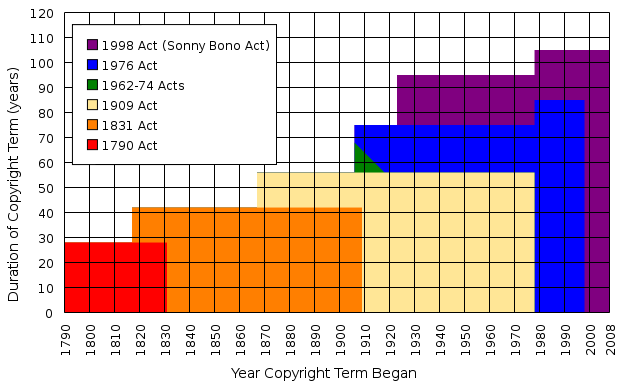
From the start of this course we noted the difficulties involved in applying copyright law to the digital age. Computers, the internet, and technology have created challenges and dilemmas that go far beyond what the writers of copyright laws could have envisioned. These laws were created in a pre-digital era before notions of remix culture or Google Book searches. Additionally, there are some 20 amendments to the 1976 Act which have added to the complexities and ambiguities of copyright law. As such, the most controversial topics have been dealt with largely based upon the view of each individual court; in this sense there is a big gap in the legal text in which an individual is subject to the whims of each court’s interpretation of the law. Paul Samuelson views the need for copyright reform as a continuous task: “If one considers, as I do, that the 1976 Act was the product of 1950/1960’s thinking, then a copyright reform process should be well underway, for copyright revision projects have occurred roughly every 40 years in the U.S.” Yet Samuelson correctly acknowledges the difficulty of arriving at this reform in practice.
Expansion of US Copyright Law
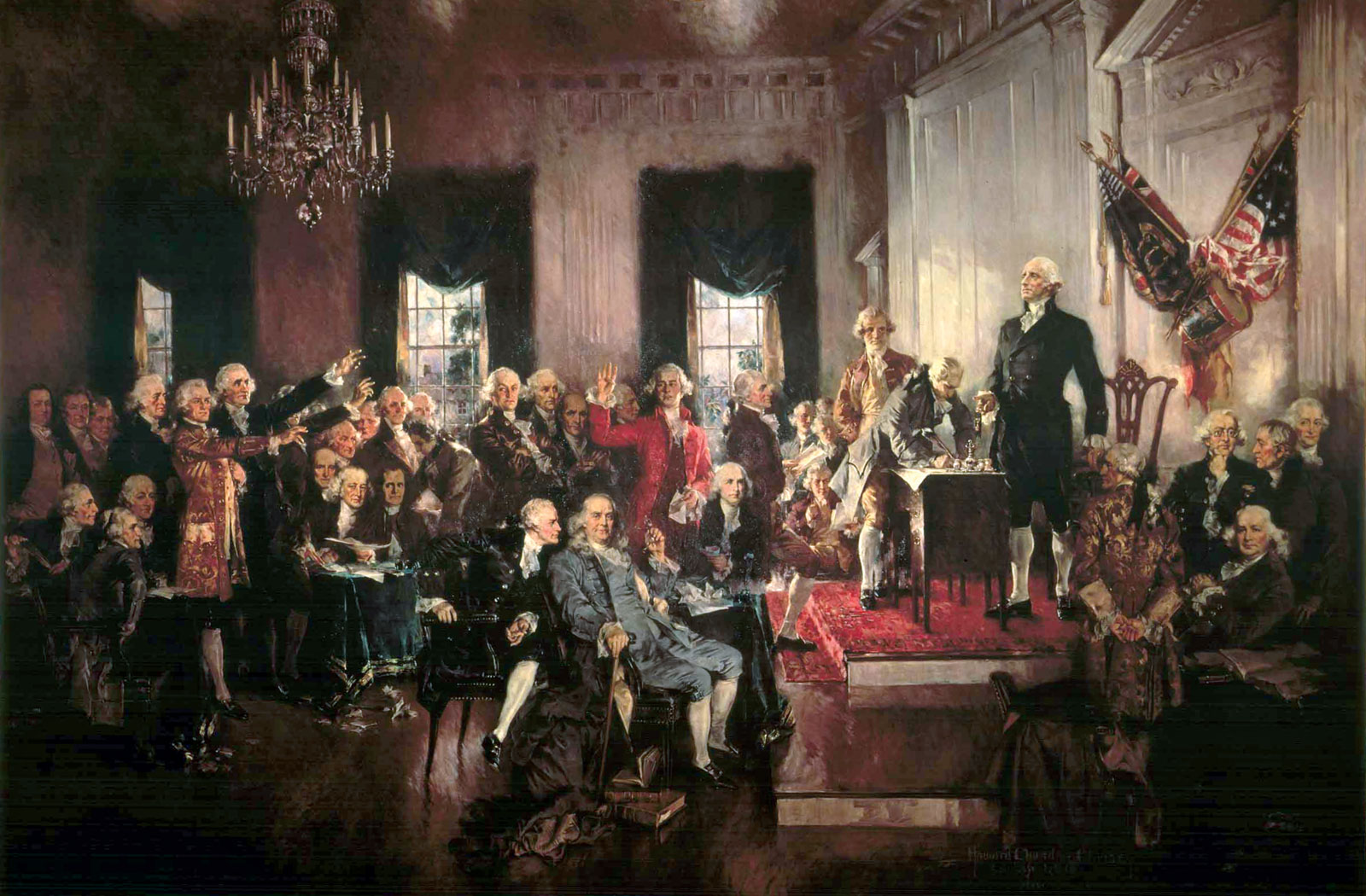
A bigger debate within copyright law is the issue of duration of copyrights. Earlier in the semester we read Mark Helprin’s article A Great Idea Lives Forever: Shouldn’t Its Copyright in which Helprin argues for preventing copyright works from ever entering the public domain. Yet as we discussed, Helprin’s viewpoint is in the extreme and contradicts the very essence of copyright and intellectual property law. As James Boyle explained: “Intellectual property is also supposed to create a feedback mechanism that dictates the contours of information and innovation production.” Thus, when interpreting or considering reform of copyright law one must recall the Framer’s intent “to promote the Progress of Science and useful Arts.”
Framers of the US Constitution
Now with this background, it is easier to analyze potential modifications of the duration aspect of copyright. Certain studies have revealed that a meager 2 percent of works 55 to 75 years old retain any commercial value–yet these works are prohibited from the public domain. This system appears to be in direct contradiction of framer’s intent in which a potential individual/artist is prevented from developing the work further without any loss to the initial creator.
The Public Domain Enhancement Act seeks to remedy this problem. In short, this bill attempts to place more works into the public domain, allowing more people to further innovation and create new works. Under the PDEA, copyright holders must pay a $1 renewal fee fifty works after the work is published and every ten years thereafter until expiration.
Personally, I find it hard to believe that such a tiny fee will deter copyright holders from extending their copyright. Even with no commercial value evident, I would think that a copyright holder would hold on to the rights with hopes of the small chance of an unforeseen future licensing project, or simply out of a desire to retain the rights. Yet, the PDEA maintains that history proves that a great majority of owners will actually pass up on holding the rights and that this nominal fee will do the job. Therefore, the PDEA would thereby pass more works into the public domain. A more important and practical consequence of the PDEA is that it will make it easier to identify and contact copyright owners of works. In the current state, one is liable for infringement for unintentionally violating another’s copyright; yet, it is increasingly difficult to even identify copyright holders without any registry. This aspect of the PDEA seems essential for ensuring that one can locate what works have protected status. Though, I am not sure how useful the works will be fifty years after publication, I believe that they may provide some benefit for innovators. An informative site on the PDEA can be found here.
While the PDEA seems to keep the framer’s intent intact, there are those who argue against passing the bill, particularly companies in the entertainment business. Wikipedia lays out the core argument of the Motion Picture Association of America (MPAA):
“Congress had already “firmly rejected” the concept of copyright renewal in the Copyright Act of 1976, which eliminated the need for registration and renewal of copyrighted works.
The $1 fee would harm copyright owners, particularly those with large numbers of active and potentially commercially viable works.
The extension fee would encourage copyright restoration, a process that re-asserts copyright over a public domain work that originated outside the US and for which US copyright was not renewed.
The benefits would fail to justify the administrative costs needed to set up and fund a registration system.
The MPAA argues that current law already allows for the creation of derivative works via licensing and release of rights.”
In my opinion, many of these claims lack any real validity. Here’s how I see it:
1-Congress may have “firmly rejected” copyright renewal in 1976, but that was 34 years ago and things have changed. Different times call for different measures.
2- A $1 fee would “harm” copyright holders? Seriously? Even if someone has 1,000 copyrights would $1,000 really “harm” them? Moreover, if they are being harmed they must be losing out on some aspect of retaining the copyright. If they want to keep it, they will likely still be collecting revenue on the work and a $1 payment should not make a difference. At the same time, at least according to the PDEA, $1 may be enough to prevent copyright holding for purposes that harm society and are against the reason for the law itself.
4- The benefits of this system to society will likely outweigh any of the costs of registration. Additionally, a system identifying what copyrights are in place is crucial for viewing what works are copyrighted and helping one contact a copyright holder for licensing purposes. The benefits are enormous; the costs of organizing such a system will be paid off pretty quickly.
5- Sure the law allows for licensing; but with the PDEA, identifying a copyright holder will be much easier. Additionally, the whole point of the PDEA is to increase ability to create derivative works and place works in the public domain at that point. Yes there is the ability to use copyrighted works at the moment, but the PDEA wants to increase those works so as to promote the progress of the arts and sciences.
At the same time, I would hope that the PDEA is just the first step in opening up works to the public domain. It may be more effective, and likely more controversial, if the fee is increased and the fifty year renewal is decreased as well. Either way, the petition to members of Congress can be signed here.
As the battle with Louis Vuitton and Google’s adwords ends. The outcome not only cleared Google of any liability, but also magnifies the argument of trademark bidding and digital representation. In this case,
I find this argument interesting because the fee flow of information isn’t entirely free. It’s still being regulated by the brain-trust at Google. But, I also find—in this example—that Louis Vuitton isn’t actually being harmed in the production of the adwords by competitors. Fist off, the Louis Vuitton name already has such a strong band, these ads are only going to aid in it’s exclusivity—and desirability. Which, makes it a bad example for the case of adword bidding.
Second, high fashion brand names like this usually can survive in somewhat of a bubble, it sometimes flourishes from embattled publicity. Which brings to questions Louis Vuitton’s motives behind chasing Google in the first place. Sure, they may think about reaching a settlement or changing some guidelines in the law, but I think the move came as it’s own way of advertising. It makes me wonder—is Google adwords actually harming any of these companies or helping them?
I think the more interesting argument in this case is the incredible power of Googles decisions. They become the ruling arbiter in searching media, which clouds the idea of free flowing information. I could see this as having some positive effects along with the negative. It’s positive in the respects of regulation, they are a business—for profit—therefore creating efficient solutions to satisfy consumers, which means finding new ways to search the internet. Innovation has always been a strong suit (or buying out innovation, but I’m not going to get into that) for Google, which has had profound effects on how most people use the internet. A negative instance, I think, is the effect on the representation of trademarks in the digital world. A vast majority of the digital world is funneled through them, which may or may not align to how one’s trademark would like to be presented to the public. In a way Google is stripping away the single trademark and allowing “free flow” of brand assimilation.
I’ve seen a lot of impressive implementations of open source (to some extent) software. From Firefox to Linux and Open Office to Eclipse, open source software has really become pervasive in our society. But this isn’t a move that is widely followed; there are still a lot of large companies or industry giants that aren’t moving toward a more open web (Microsoft, Apple, and Adobe, to name a few). What does that say about the future for open source?
Open source has always filled a strange niche of demand; a group of elites building their own Utopia in a sense, working with each other to find solutions to difficult problems. It sounds great, but it isn’t perfect, and it isn’t the whole solution. If everything were open source, everything would be fully customizable and free, and one could do anything and everything with their own personal experience. The problem is that not everyone is a programmer, not everyone has the time or know-how to build his or her own interfaces or programs. How could tech support operate for these individuals? The gap between the tech savvy and technophobes would be far greater than it is today. Sure their would be people who would be willing to create templates for these individuals, but would those people be enough to provide for everyone who needs it? Maybe. Even then, it is much easier for a company with a set system to provide for those needs.
The dimorphism has other useful characteristics as well. Fostering competition. For open source to work, you need a group of committed programmers who are willing to spend their time and resources on an endeavor that they really believe in. Often, however, those resources fall short. Sometimes there aren’t enough hands. Bring in the corporate side, and you have enough funding and enough hands to go around. They also bring their own motivation, commercial success. This isn’t a rant on greed or corporate behavior; companies exist to meet the needs of consumers and money exists to facilitate that transaction. Fiscal success is a powerful motivator for research and development, and competition an even better one.
So while a lot of people complain about Apple refusing to support Flash or Flash’s hold on the market, or about Apple’s stringent controls on their app market (a lot of Apple popping up >.> ), it isn’t really an issue. Either another company rises to the occasion and fixes the issues, or individuals become passionate about it and fix it themselves. I don’t think that open source is the only future, but I do believe that it is part of it. Whether programmers are motivated by monetary compensation or by some passionate belief, they are still fighting to write better code than the next programmer. And honestly, that’s all that matters.
Dogs don't know how to develop open source software. They are also useless with power lines and telephone poles.









 Yale Law Tech