Trademarks Galore!™ – by “Hank H”

There has always been an interesting dynamic with boundaries in how they serve not only a primary function in providing definition to a particular state, but inevitably by doing so they also define the state for the reverse, captured in the familiar adage, ‘boundaries are made to be broken.’  if there is ever a case where this cannot be less true, it is with trademarks.

Several years ago, when I was in Seattle, WA, there was a ice creamery on ‘the Ave’–a street in front of the University of Washington. It was a local store that mixed ice cream with ingredients of your choice on a cold, marble slab. None of us had ever heard of ‘Cold Stone Creamery’–which suspiciously sounded like they did the same thing as the then named ‘Marble Top.’ As far as we were concerned, Marble Top was the real deal. Then a few years back, it went through several name changes over the span of a few months: Marble Top, Cold Stone, and Mix on the Ave–unless it’s changed again. Was the store bought out by another franchise? Was it change of management?–everything seemed the same: the comfy, if somewhat worn couches were still in their corners, the flavors, the staff, what was going on? What we later found out was that our favorite ice creamery’s identity crisis was due to trademark issues. Whether or not the owners copied Cold Stone Creamery first, or developed the concept of their store independently, it was clear that there was only room for one marble-top-mixing ice creamery in town.

And this is how simple it used to be. As outlined in William Fisher’s Overview of Trademark Law, trademarks are pretty well defined and straightforward. On one hand, they are simple governing guidelines that define identity, and recognize the value of imagery, visual connection and identification. On the other hand, the Trademark Law also takes into account how these identities operate within the public sphere, so that, for instance, a generic mark that is extremely useful for identification cannot be controlled by a single manufacturer. What these laws have yet to fully address is what to do when identity, be it expressed as a trademark or a logo, is taken out of its traditional medium and thrust into a new context. In Steve Lohr’s A New Battle is Beginning in Branding for the Web (Link), Lohr eludes to new areas of conflict, namely how trademark owners will be faced with wrestling how their identity can exist on new technologies. He touches on, for instance, the purchase of trademarks as keywords for Internet searches. But equally important he describes an evolutionary departure from traditional forms of branding which has evolved to reflect our time. If you think of products and services that we grew up with, we could easily make out m&m’s, for instance, or a gas station.

Internationally recognized trademarks and logos.


Towards the end of Lohr’s article, he describes how technology has also had its own effect in the United States Patent Office. He observes that in prior times, trademarked images were grouped by visual categories, as “‘grotesque humans’ (the Pillsbury doughboy) and ‘human body parts’ (the Yellow Pages’ walking fingers).” His point underscores the shift that has taken place for companies to branch from the traditional practice of branding, which was to create an identity that indicates a singe entity. Branding now has evolved to include, sub-branding to reflect a suite or a family of products or services that fall under one umbrella, a prime example being Apple’s family of products.

Apple’s original logo

Apple’s growing family of products

The interesting aspect for me personally as a designer is to see not only how branding is effected by the changing medium and needs of our time, but it is also to see how trademarks take a life of their own and exist in a new context. In truth, it is only because we have had a foundation of trademark laws that make pieces such as the following short film, Logorama, take on the meaning that it does.

As the definition of branding continues to expand, trademark laws will inevitably need to be expounded and redefine how identification operate in the ever-evolving technological and competitive landscape.

Frivolous Patents and Open-Source Research: Patent Law in India – by “Jacob A”

On April 11th, leading Indian drug makers banded under the collective “Indian Pharmaceutical Alliance” (IPA) to challenge 25 frivolous patent applications filed by several multinationals. For the past five years, since a massive transformation in Indian patent law (effectuated in 2005) that finally allowed the filing of pharmaceutical patents (before 2005, most pharmaceuticals were actually nonpatentable), the vast majority of drug patents have been granted to foreign multinationals. Until the IPA demanded its review of pharmaceutical patent grants, neither the names of the drugs for which patents had been awarded, nor the identity of their makers/patent holders, were known to the public public. With the recent disclosure by the Indian Patent Office, it was revealed that Novartis, AG, and Eli Lilly won roughly a third of the 81 contentious drug patents. Aside from these 25 challenged patents, another 51 were granted to other foreign drug makers (La Roche, Shering Corp., Merck, F. Hoffmann, etc…). Only five of the 81 pharmaceutical patents were given to local Indian drug makers.

http://www.livemint.com/images/C811828E-BD27-4EB5-8254-8EE5B65D0BF2ArtVPF.gif

The IPA alleges that the 25 contentious patents held by Novartis, AG and Lilly don’t merit patent protection under domestic law because they don’t enhance the efficacy of previously known drugs. The tactic, the IPA alleges, has been to “evergreen,” to extend the lifespan of an existing patent (for an indefinite period of time, à la copyright-extension) by tweaking the drug’s molecules a bit, without enhancing the drug’s function whatsoever. We’ll see how the suits play out, and whether the IPA will be successful in challenging the big multinationals’ patent extension efforts.

A large part of the problem with IP enforcement and practice in India, especially with regards to patent granting and infringement, has been the lack of transparency of patent records, which, for all the charges of corruption being thrown about, was really just due to a poor infrastructure.

http://img.funtasticus.com/2007/sept/pharmacy220907/pharmacy003.jpg

It was only last year that extant patent records were finally digitized and uploaded to a central server, and only a few months ago, in October 2009, that the records were finally searchable online. In the same vein, a lack of patent examiners has hindered the patent-granting process (in the past) or, as is the precarious case today, granted patents when there was no justification for doing so.

But if “evergreening” patents was certainly aided by the poor IP oversight, it did not depend entirely on bad infrastructure to carry out its nefarious aims. Evergreening is symptomatic of the egregious overstep of patent granting, but is not its only occurrence. The massive 2005 change in Indian law that finally permitted for the patenting of pharmaceuticals was carefully to include a restriction on traditional and commons-based medicines, a section labeled 3(d), “which restricts protection being granted to already known and long-ago patented drugs and their combinations.” Even despite the new presence of pharma patents, Indian scientists are urging people to infringe on drug patents. Beyond that, on the more constructive end of things, a few scientists have recently mapped out the tuberculosis genome, and are refusing to patent the genome and freeing up future research through an open search approach: “Anyone can take advantage and develop a drug based on our research. The aim here is not patents but drug discovery for a neglected disease.” Open access to the tuberculosis genome will be useful for researchers working on solutions for combatting the disease. Anyone across the world is free to join the effort.

The restriction on the new patent law highlights the enormous frequency (and problematic nature) of patents on traditional drugs. In 1995, the US Patent Office (not the Indian one) granted a patent to the University of Mississipi’s Medical Center for the “Use of Turmeric in Wound Healing.” Since then, patents have been granted to US firms for Basmati rice and yoga postures. When pressed by the Indian government for explanations as to their ludicrous patent grants, the US’ answer was that “’India has not yet made available product patent protection for pharmaceuticals and agricultural chemicals, and thus has chosen to take advantage of at least part of the exclusive marketing rights.”

For Indians in India, the impact of an American patent on Turmeric use is much less significant than for Americans, especially considering that international enforcement and standardization of IP laws (under bodies like the WIPO) is far less strict than domestic enforcement by the US. But consider the case of an Indian émigré in the United States using Turmeric to heal scrapes and wounds – she would be violating the patent. Although it has been revoked, the US patent on Turmeric nonetheless highlights what seems to be the dominant (and quite problematic) strategy of the US Patent Office (which has since, sadly, been adapted by the Indian Patent Office as well), to grant patents, regardless of whether they meets the necessary standards, flaunting left and right the non-obviousness clause, or the efficacy-clause, and to revoke them only when under pressure to do so from external parties.

India is the greatest IP paradox. For all its notorious flouting of IP rights,l India is one of the preferred locations for the R&D labs of those same multinationals pressuring India to strengthen its IP policy and enforcement. IT giants Microsoft, Intel and Motorola have immense R&D operations in India, and pharmaceutical companies are beginning to establish research centers there as well. India is the ideal innovation center because of its sheer mass of low-cost, high-skilled knowledge workers. The average salary of a scientist or engineer in India is $20,000, a figure that pales compared to the $90,000 average in the United States. Whether IP maximization drives India’s stunning knowledge culture, or rather, whether the commons-based approach to knowledge that prevailed until recently is instead responsible for providing IP maximizers such as Microsoft with the R&D they need to function, is a question here left unanswered.

Cybersquatting or Free Market Domain Investing? – by “Elie C”

The market created by domain registration treats domain names like fungible investments that derive value from certain events (such as celebrity dramas, or natural disasters) or bet on future outcomes that may increase the demand for particular domain extensions (although ICANN has rejected the use of .xxx as an ‘online red district’ designation, the commercial value of registering domains with that particular TLD is obvious and akin to making investments based on pending regulatory decisions).

However, trademark plays a major role in domain registration when a ‘domainer’ becomes a cybersquatter who in bad faith intends to commercially benefit from a domain that derives its value from the value of the goodwill of someone else’s trademark. Bad faith includes acquiring the domain name primarily to sell or rent it to the rightful trademark holder or their competitors, or generally profiting from the likelihood of confusion with someone else’s trademark. Cybersquatters can monetize their doman registration by posting paid links or advertising related to the trademark to attract users seeking information related to that trademark. Whereas investing in domains with particular characteristics is not particularly  different from other forms of fungible investing, the market for domain names have led to various forms of ‘bad faith’ registration, such as typosquatting (also bluntly called URL hijacking), which relies on Internet users’s typos when inputting a website URL into a browser to direct users to their domain.

Distasteful for sure, but is it trademark infringement?

ICANN’s UDRP policy allows a trademark holder to dispute a domain name if it is confusingly similar to their trademark or service mark, has been registered and is being used in bad faith, and the squatter has no legitimate interests in the domain name (registering a domain with a trademark ). The Anticybersquatting Consumer Protection Act (ACPA) goes on to establish cause of action for registering, trafficking in, or using a domain name confusingly similar to, or dilutive of, a trademark. But the distinction between a trademark-infringing cybersquatter and shrewd domainer is not always clear (for example, compare a domainer who owns two character domain names that later become valuable to a trademark holder – such as BN.com for Barnes and Noble or AE.com for American Eagle Outfitters – to one who has registered http://wwwwikipedia.org.)

In People for the Ethical Treatment of Animals v. Doughney, the court found that the defendant, who registered peta.org to create a website called ‘People Eating Tasty Animals’, was creating a parody and had the first amendment right to do so. However, when Doughney made statements suggesting that PETA should “settle” with him and “make him an offer,” the court saw this as an attempt to profit from his domain name and ruled that he had violated the ACPA. The nuance between profiting from a recognized trademark and parody is among many gray-area issues surrounding cybersquatting, which the court has noted in this particular case.

Parody or trademark confusion?

A Broken Policy – by “Logan M”

Companies and individuals, in our capitalist society, get ahead and make their existences better (again, in the capitalist sense), through innovation. The government’s obligation to help the individual, and, especially now after the decision in Citizens United, the company, means that the government should assist those entities in their innovating. This is a conclusion derived from simple logic and a fairly well-accepted view on the purpose of government, but one which our government has unfortunately forgotten.

Perhaps that’s a bit mean. Out government has not forgotten its obligation to help us to innovate, it simply has no idea how to do so, at least in the realm of patent law.

Patents were started and continue to be issued in order to promote innovation in two ways: first, because it allows the holder of a patent to gain a unique monetary advantage; and second, because it encourages others to use the public information provided and to improve on existing designs. However, the law as it stands allows for the holder of the patent to seek damages from an “infringer” who has simply, by chance, created something that has already been patented.

This means that if I were to come up with a great idea off the top of my head tomorrow about how to best sell items online, say allowing people to type a list of all the things they want to buy and have my program auto-search the web to purchase them, I could be sued for creating and utilizing such a program if someone else had come up with the same thing and could prove they did so before me. There is no necessary exchange of information – the company does not even need to have released the application before I had my idea. The simple fact is that if a company gains a patent, they can sue anyone for “infringing” it, even if they never intended to do so.

But how does this apply to my original point about the government being clueless about how to help us innovate? The connection here is fear. Anything that I create may have already been patented, unbeknownst to me. That possibility opens up the path for a lawsuit and for my having to pay the holder of the patent. Unless I have some truly and utterly unique idea that I do not believe anyone else could ever conceive of, and unless that idea could make me enough money to justify the risk, it seems like it would be in my best interest to never invent anything. Any invention runs the risk of “infringing” on someone else’s patent, and because of this, innovation is stifled. If the government were to adjust its policy and require the holder of a patent to prove prior knowledge of their product or process on the part of the alleged “infringer” when filing a suit, this fear would be removed and individuals and companies would be in a better place to innovate. This would prevent both my concern above and horror stories such as the one laid out by Gary L. Reback eight years ago. Unfortunately, the law is the same now as it was then, at least in this aspect.

—————————

Lockhorns Comic Strip

The reason Leroy is sad is that he just thought up a grand new method of transmitting data over the internet, but fears it may be already owned by Comcast. Either that or he’s depressed that he didn’t patent his wonderfully “non-obvious” idea for internet sales:

Software Patents are for the Lawyers – by “Matthew C”

In 1991 Bill Gates said “Some large company will patent some obvious thing” and use the patent to “take as much of our profits as they want.” http://www.nytimes.com/2007/06/09/opinion/09lee.html.  Soon the shoe would be on the other foot – and Microsoft would use that shoe to kick the little  guy with big fat lawsuits!  But, though he would later fail to heed his own advice, Gates also understood the consequences of over-patenting, saying:  “If people had understood how patents would be granted when most of today’s ideas were invented, and had taken out patents, the industry would be at a complete standstill today.”

Patents, like copyright, exist to spur new creations.

As a society, we trade the cost of a temporary monopoly for the benefit of incentivizing new and creative inventions. In the case of software, however, this goal seems to have fallen by the wayside.  Instead, software research and development has become like navigating through a field of landmines.  There are simply so many patents out there that everyone ends up infringing.  And it just does not make sense in this day and age to grant exclusive, legally enforceable rights to everyone (probably literally millions of people and potential patents) who comes up with a new (or not all that new) way to use a computer.

In their book Patent Failure authors Bessen and Meurer claim that the cost of patent litigation began to outstrip profits from patents in the mid 1990s.  Furthermore, two thirds of the profits are going to pharmaceutical and chemical companies.  In understanding the rising cost of patent litigation, it helps to know that a company like IBM has a patent department consisting of hundreds of lawyers.

The litigation is not just pervasive and costly, it is pernicious.    Most egregious are patent trolls, companies that collect portfolios of patents for the purpose of extorting expensive licensing fees with the threat of costly litigation.  Yet the litigation does not need to be so clearly exploitative to have negative effects.  DataTreasury recently won a $27 million victory against U.S. Bank for infringing a check imaging patent.

Apparently it didn’t particularly matter that the patent in question had originally been rejected by the patent office and accepted only after the “inventor” Claudio Ballard simply added a layer of encryption indicating from which ATM machine a check came.  What’s more the defense cited check scanning technology going back as far as 1981, albeit with different underlying mechanisms.

We can only hope that the Supreme Court recognizes the error in allowing business methods patents and rules accordingly.  (And by the way they questioned unfortunate Mr. Jakes during oral arguments, it seems they do) Until then, the cost of doing business will continue to include extravagant litigation, and business innovation will be held back.

Let’s just hope that when the Court finally decides the result is not like this quote from DataTreasury’s attorney Nelson Roach:

“Remember what Dr. [Jerry] Hausman, the defendants’ expert, told you would happen if we disregarded intellectual property rights?”  Roach continued. “That we’d end up like India and Egypt where people don’t invent things. Instead, they go around talking about ways they hate America and ways they want to fly airplanes into our buildings.”

IBM vs. open-source – by “Shirley B”

This past Tuesday, IBM sued a French software company called TurboHercules.  This would seem to be a relatively unimportant phenomenon: people get sued over patents all the time.  But here’s the twist: TurboHercules is an open-source software company.  IBM, in 2005, made a list of 500 patents over which they promised on good faith not to sue anyone.  Two of these patents are on the list of items IBM is suing TurboHercules over.

The fight seems to be over system emulators, and the issue of allowing users to get around using only IBM’s System Z to run the operating system.  IBM continues to make money with its hardware because you need its hardware to run the software.  Hercules was an open-source program that allowed you to emulate the System Z software onto common hardware, a program that IBM had no problem with, even though the licensing for it was vague.  TurboHercules offered Hercules to companies as a way to backup their systems, a venture that proved rather profitable.  While I don’t entirely understand the technology part of the controversy, the role that patents, profit, and open-source play in this, and will continue to play in software development, seems incredibly important.

Technologically Impaired Duck does not understand.

IBM has, for a long time, claimed to be an avid supporter of open-source software; this has been evident most prominently in its support of Linux.  Many are concerned that this new suit will pit IBM against open-source.  But what does this even mean in a world where most software is written in an open-source way?  Will it just be that the smaller software projects slip through the cracks, and IBM enforces its patents where it sees fit to support its business model, as it has done here with TurboHercules?

In a post on cnet, Matt Asay, a COO at Canonical, says that this lawsuit heralds the true “arrival” of open-source software into the world of legitimate software.  The fact that IBM is treating this open-source program as a legitimate one, which can be sued, taken to court, and is a veritable business concern to a huge company like IBM indicates the importance of open-source.  Perhaps this lawsuit is, in fact, IBM’s recognition of open-source as an important power in software, rather than their pledge to protect open-source by not enforcing patents.  Open-source can rival their business interests – it’s no longer a hobby for enthusiasts.  But will open-source’s efforts be hindered by this new enemy – patents?  That seems rather dramatic, but stepping on the toes of patent owners  certainly seems more likely.  Time will tell.

The Future of Open Source, or Open Source is the Future? – by “Matt A”

I’ve seen a lot of impressive implementations of open source (to some extent) software. From Firefox to Linux and Open Office to Eclipse, open source software has really become pervasive in our society. But this isn’t a move that is widely followed; there are still a lot of large companies or industry giants that aren’t moving toward a more open web (Microsoft, Apple, and Adobe, to name a few). What does that say about the future for open source?

Open source has always filled a strange niche of demand; a group of elites building their own Utopia in a sense, working with each other to find solutions to difficult problems. It sounds great, but it isn’t perfect, and it isn’t the whole solution. If everything were open source, everything would be fully customizable and free, and one could do anything and everything with their own personal experience. The problem is that not everyone is a programmer, not everyone has the time or know-how to build his or her own interfaces or programs. How could tech support operate for these individuals? The gap between the tech savvy and technophobes would be far greater than it is today. Sure their would be people who would be willing to create templates for these individuals, but would those people be enough to provide for everyone who needs it? Maybe. Even then, it is much easier for a company with a set system to provide for those needs.

The dimorphism has other useful characteristics as well. Fostering competition. For open source to work, you need a group of committed programmers who are willing to spend their time and resources on an endeavor that they really believe in. Often, however, those resources fall short. Sometimes there aren’t enough hands. Bring in the corporate side, and you have enough funding and enough hands to go around. They also bring their own motivation, commercial success. This isn’t a rant on greed or corporate behavior; companies exist to meet the needs of consumers and money exists to facilitate that transaction. Fiscal success is a powerful motivator for research and development, and competition an even better one.

So while a lot of people complain about Apple refusing to support Flash or Flash’s hold on the market, or about Apple’s stringent controls on their app market (a lot of Apple popping up >.> ), it isn’t really an issue. Either another company rises to the occasion and fixes the issues, or individuals become passionate about it and fix it themselves. I don’t think that open source is the only future, but I do believe that it is part of it. Whether programmers are motivated by monetary compensation or by some passionate belief, they are still fighting to write better code than the next programmer. And honestly, that’s all that matters.

Dogs don't know how to develop open source software. They are also useless with power lines and telephone poles.

Open-Source Software in Your Living Room – by “Michael C”

Google TV
Google TV

Google’s innovations and technologies are constantly becoming more prevalent in our lives. Google already has a firm hold on the computer and mobile markets, but soon, Google technology will find a way into another room in your house—the living room. Google is currently developing “Google TV,” a platform that will deliver web content, everything from Twitter to YouTube and Hulu to Picasa, through televisions and set-top boxes. Google has realized that more and more consumers are exploring ways to bring web content to their TVs, and they want to play a central role. They are teaming up with Sony and Intel to develop the first set of devices, but all device and TV manufacturers will have access to Google’s software platform. Clearly, Google faces a lot of competition in this field, as they will be competing with everyone from TiVo, to Apple (remember the Apple TV?), to smaller companies like Roku and Boxee. Yet, there is a unique element to Google’s foray—the Google TV software will be open-source.

Why does Google plan on opening up its software? Google feels that the various set-top boxes that currently exist are too limited in the amount of web content that they offer. By opening up the software platform to developers, the company hopes that it will “spur the same outpouring of creativity that consumers have seen in applications for cell phones.” In fact, the Google TV software will be based on their Android operating system for smartphones, so that developers already familiar with the platform can begin developing software quickly. Google will deliver a toolkit to programmers in the next few months.

It will be interesting to see how Google’s move will play out. With such a crowded market, Google can only succeed by having an innovative, unique product, so it makes sense that Google chose to make its software open-source. Yet, I am curious about how open the platform will actually be. Google may allow anyone to manipulate and change the source code of their software, but will device manufacturers allow independent developers to put their software on the devices, without any restrictions, or will it be limited to the device-specific software? Perhaps Google will take a page from Apple’s book and make something similar to the app store where developers can upload their software, which must be pre-approved by Google before users can download it onto their devices.

Additionally, it seems like the current collection of set-top boxes are aimed at people who value simplicity and ease of use over modifiability. Those values aren’t necessarily at odds with each other, but Google seems to be positioning its software for use on higher-end, more powerful and customizable devices (probably costing over $200). At some point, the average user may just decide to go for the easier to use and more inexpensive devices out there (like the $80 Roku) rather than spend extra for a Google TV device, as they may not find the extra power necessary or valuable. The power user, at the other end of the spectrum, may wish to skip the Google TV as well and simply hook a computer up to the TV, which would be the most powerful solution. Therefore, the very nature of the device as a middle ground, so to speak, may result in a relatively small user base. Yet, if Google can properly harness the innovation of the open-source development community, their software could become the best around and take the set-top box market by storm.

Google has realized that more and more consumers are exploring ways to bring web content to their TVs, and Google wants to play a central role. They are teaming up with Sony and Intel to develop the first set of devices

DRM – A Personal History – by “Brendan G”

A few years ago, my laptop was stolen. A day or so after the theft, I started to get bills from iTunes for songs I had never downloaded. Whoever has possession of the computer was able to purchase songs through the iTunes store because I had the “one-click” download feature turned on.

http://vimeo.com/moogaloop.swf?clip_id=222950&server=vimeo.com&show_title=0&show_byline=0&show_portrait=0&color=ffffff&fullscreen=1

My Laptop (circa 2007, pre-theft)

Assuming I could just change my password and prevent future downloads turned out to be wrong. Apparently once a computer is associated with an iTunes account, the user is never asked to input their password, even if that password has changed. The only thing I could do, according to Apple, was cancel the credit card associated with the account and open a new account. The worst part? Apple had flagged my old account as “fraudulent” so I could no longer listen to backups of songs I had downloaded prior to the theft.

Now I was left without access to the songs I had purchased with my old account, while the thief was able to continue listening to my music, free of charge. Apple wanted to make their DRM system transparent and user friendly, but in the end, left a gaping vulnerability in the software that only hurt the legitimate consumer.

Had the iTunes store been DRM-free, I would have been able to recover my music from a backup relatively easily, but instead I was locked out of my own purchase. And at the same time, their DRM system did nothing to prevent someone else from accessing the content. So in the end, nobody wins.

Of course, this all happened before the iTunes store went “DRM-free”, but the experience made me reluctant to purchase anything from them, knowing how lax their security measures are. I was never a very big spender on iTunes, but ultimately Apple lost a customer because of their DRM system.

Illegal to Plug In – by “Kate H”

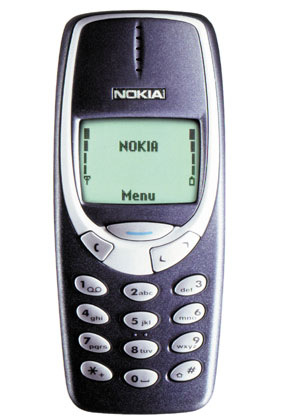
Remember these?

My friend still has one of these...

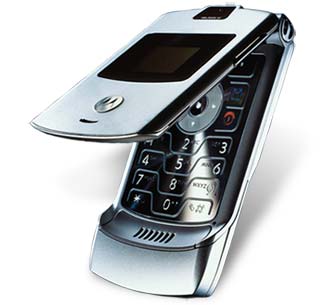
How about these?

Flip!

Today, the phone market is teeming with options. A consumer can take her pick of smart phone operating systems, if he’s into that sort of thing. Cell phones and phones that connect to landlines come in every color and shape imaginable. Every few months, phone manufacturers release new styles, operating in a market where consumer demand guides innovation. People find their two-year contracts burdensome when new models arrive on the scene.

https://i0.wp.com/www.bigfootsden.com/store.items/bubble.gum.phone.jpg

http://sorgenfrei.files.wordpress.com/2008/07/get_smart_shoe_phone.jpg

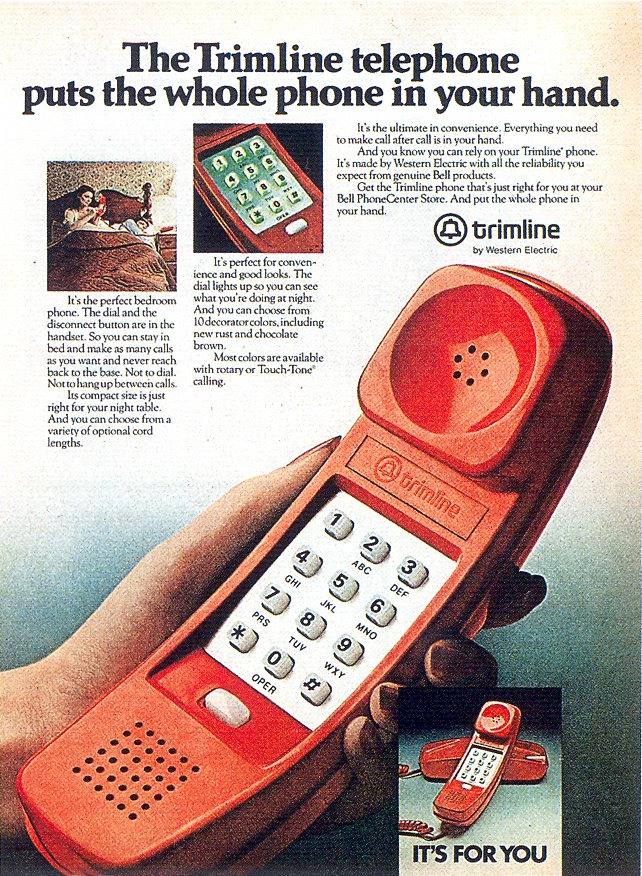
In such an environment of choice, it’s easy to forget that this was not always the case. As Doctorow reminds his readers, “It used to be illegal to plug anything that didn’t come from AT&T into your phone-jack.” (13) Phones were rented from the companies that provided phone service, and due to a lack of competition, innovations were virtually non-existent. With government supporting the monopoly and other gigantic barriers to entry, consumers were left with very few options, beyond the decision to add a second line.

http://www.archive.org/flow/flowplayer.commercial-3.0.5.swf

In this bizarre AT&T advertising musical, the separate beds in the master bedroom are the least of the hilarity. The whimsical housewife dreams of her dream house, sultrily requesting, “I wish I had a stove whose pilot light was always lit… Furthermore, a kitchen phone at hand when friends call to chat a bit!” (Skip ahead to 7:30 to experience this musical gem.)  Later, she croons, “A lady likes to have a chance to change her mind. I might like a yellow room with turquoise and white. And maybe a telephone that lights up at night.” (I’d fast forward to 9:30 for this one.) In reality, in 1956 this leading lady would have had very few options in the case that she decided to “change her mind.” She would have had a limited catalog of colors. If she was lucky, perhaps she’d have the option of renting a princess phone.

Of course, many households worked around the restrictions and set up second lines in their houses, without renting from the phone companies. People will hack. People had more incentive to hack when their only legal option was to pay a ridiculous rental fee for a second phone. Adding an illegal second line was not uncommon: neighbors and friends helped each other to bypass the rental rules.

1983, by government command, AT&T began selling phones to the public, instead of just leasing them. At this time, phones had still not progressed much beyond their original styles.

OldSchool1980

Clearly this opening of the market was good for the consumer. Clearly this was good for everyone except for the phone companies who could no longer collect monthly rental fees for the use of their phones. It’s easy to see the parallels between the phone rental system and the current practice of using DRM to “protect” intellectual property from illegal distribution.

When I purchase music, videos, software, or other media protected by DRM, I feel as though I am renting the material. At any time, the company who manages the protection on my purchases could go out of business, or restrict my ability to use my property –they claim they’re selling, not renting– in whatever way I choose. Even as a not-so-savvy middle school student, I removed the protection on the music I purchased from the iTunes store by burning discs and ripping the songs back onto my computer. It was easy.

As many have pointed out, trying to protect encryption methods through anti-circumvention laws that restrict people from spreading secrets is both inefficient and ineffective. (And come on, the idea of an illegal number is just funny.)  Hackers will hack. Phone owners will add secret second lines. Middle school students will figure out how to circumvent protection through a simple Google search. Continuing to utilize DRM as such will only serve to anger paying customers. And that’s bad for business.