Cyberbullies: Bullying Then and Now – by “Will P”

Kids are mean

Really?

Children are cruel creatures.  This is not new nor should we be surprised.  What’s different now is that there is a record of it.  Before what happened on the playground stayed on the playground.  But when insults can be exchanged online, there is a persistent record of the taunts.  This persistence can be more stressful for the “cyber-victim”, because unlike a simple verbal jab, it isn’t ephemeral, and presents the opportunity for many to jump on the dog pile.

The other – in my opinion, probably unfortunate – difference between “traditional” and “cyber” bullying is that now adults can read the insults against their children or students word for word.  Imagine if someone provided your parents with every insult you said as a child along with every insult you received.  Yes, there would be a clusterstorm.

Let’s stop kids from being mean

Let’s convert the Pope to Judaism too!

I’ve found the “adult” reaction to cyberbullying to be like an episode of South Park: the children are really mean to each other and the adults overreact in a comically irrational way.  This past summer, ABC Family released a film Cyberbully to inform folks about the dangers of cyberbullying (and probably also to capitalize on the brouhaha).  You can probably guess the plot, but I’ll summarize it pictorially (please pardon the misuse of memes):

Plot of Cyberbullies

I don’t want to give the impression that I don’t think cyberbullying isn’t an important issue, but I’m always cautious when someone’s reaction to a situation is to try to pass a law without examining any alternative options first.

What about the laws in those states?

Can we send the evil bully to prison?

Actually, in the Great State of Missouri, cyber-harassment is a Class D felony – punishable by up to four years imprisonment – along with a third DUI conviction and fraud.

Personally I fail to see what is reasonable about dealing with problems between children through legal means.  If the anti-cyberbullying activists claim cyberbullying is so dangerous because digital harassment is persistent, how does sending another kid to court lessen the time the original harassment is an issue?

Legal action should be a last resort (this is a normative claim!).  There are much better options for everyone’s sake available.  In ABC Family’s movie Cyberbully, the bullying stopped when the protagonist simply stood up for herself and when her mother confronted the parents of the offending children.  We don’t always need to make new laws, when a new technology emerges; we just need to figure out how to solve the same problems that we’ve dealt with for generations… but online.   In Cyberbully, despite its portrayal, the internet is not to blame for bullying, people are.

I think part of the reason for the severity of these cyberbullying statutes is that we actually dehumanize the bullies.  Just as the cyberbullies are willing to make more obscene statements because they aren’t in front of their victims in real life, we are willing to deal with these cyberbullies because our image of these cyberbullies is some internet Beelzebub rather than another child.

Law vs. Code

Could this discussion be applied to this topic?

That ABC Family movie told the story of how harassment on a site, which is a thinly-veiled stand in for Facebook, could get out of hand.  The movie emphasized that profiles could be fake, information could exist forever, and that there is no “delete button.”  The family resorts to lobbying for a law, but if we look at these particular grievances, Facebook is actually quite good about having code mechanisms for dealing with this set of issues.

  1. There actually is a delete button
  2. Facebook in my cases requires email verification to join a particular network, so the risk of someone faking a profile that would be reasonably believably is slight
  3. You can report fake profiles:

//It would have been really easy for friends, who were too afraid to say anything, to anonymously report and end the entire situation

Solving a problem

What Constitution?

I quick Google search for cyberbullying turns up www.stopcyberbullying.org the website of an organization dedicated to stopping the scourge of cyberbullying.  The site has information for children, parents, politicians, and law enforcement.  It didn’t take much browsing to come across this gem:

One of their categories of cyberbullies is the called “Revenge of Nerds.”  Its description includes this quote: “Because of this and their tech skills, they can be the most dangerous of all cyberbullies.”  Ah yes, nerds are indeed the laser-armed sharks of the internet.

This “charming” website has advice to offer schools: you too can enact “regulations” to stop cyberbullying no matter how much this would infringe on the Constitutional rights of students.  The site says:

“If schools are creative, they can sometimes avoid the claim that their actions exceeded their legal authority for off-campus cyberbullying actions. We recommend that a provision is added to the school’s acceptable use policy reserving the right to discipline the student for actions taken off-campus if they are intended to have an effect on a student or they adversely affect the safety and well-being of student while in school. This makes it a contractual, not a constitutional, issue.”

I’m always impressed by a website when they provide persons of authority ways of circumventing Constitutional protections against overzealous school administrators.

Some problems don’t have solutions

X2 = -1, yes, a solution exists but it’s imaginary

Bullying has been around since at and before the dawn of man.  Unfortunately there’s no way to end it.  It isn’t as simple as passing a law – people break laws, and they do so frequently.  When faced with the inevitability of bullying, rather than trying to eradicate it, we should focus more on teaching children (and adults) how to cope with it.  Alas, that would be too reasonable.

The Internet as a Militia – by “Joshua E”

The Bill of Rights was not a guarantee of individual liberties. Rather, before the Fourteenth Amendment came along and everything went to hell, it was better viewed as a limit on the despotic potential of a centralized government; a potential that terrified the founders of our Constitution. Thus the First Amendment was a guarantee that the national government would not suppress assembly, speech, and the political discourse necessary to oppose tyranny. Thus the Second Amendment was a guarantee that states could hold militias in order to resist with force an oppressive government. Of course I am oversimplifying a very complex and contentious debate, but allow me for a moment to make a logical fallacy. This guy agrees with my view of the Bill of Rights:

So obviously I’m right. Let’s just leave it at that. I apologize for the many Yale words in my opening paragraph.

I, like Jack Balkin, am interested in how the development of the Internet changes the role that the Constitution has in our current society. Balkin focuses on the oppression of free speech by private companies, and how unable the Courts are to provide meaningful protection in this area. He believes that fighting technological infrastructures, business models, and social practices with well-crafted laws is the way to protect our liberties. He believes that the Internet has fundamentally changed the Bill of Rights’ ability to protect us from government (it’s original purpose, as outlined above), and therefore we must look extra-judicially to protect our rights.

The pacifist in me wonders whether the Internet landscape has also fundamentally lessened the necessity for militias, and other Constitutional protections against an abusive government that attempts to limit our free speech. Due to its interconnectedness the Internet is extremely difficult to regulate (though not impossible). In the past if a government wanted to quell speech, they had pretty effective means of doing it. Books can be banned or burned. Radio communications can be jammed. Protests can be broken up. The Internet is a whole other animal. Because it is generative, it allows people to circumvent many of the ways in which a government might try and limit access to certain material (for example by the use of proxies). In this way, I believe it acts as a check on the government. When the government gets out of control, the citizenry does not need to revolt using militias, they can simply tweet about it. Despite the fact that the following governments do not share the same Constitutions as we do, nor necessarily the same values, some examples from around the world will I think be illustrative.

Russian Coup

In 1991 leaders of the Communist Party in Russia led a coup against president Gorbachev. The leaders struck while Gorbachev was on vacation, and they hoped to expand support for their cause by limiting the flow of information to the west and most importantly to their people. They censored both news and phone links to the west. Television played nothing but operas and old movies. Their strategy would have been effective, except for one main flaw: Relcom.

Relcom, an acronym for reliable communications, was a basic computer network that Russia launched in 1990. Though Relcom was a purely e-mail network at the time, it still had the power to undermine the government’s efforts to suppress the free flow of information. Those who opposed the revolution were attempting to distribute a decree by Boris Yelzin which attempted to inform the public of the coup and what was happening. Without Relcom, they would have had to scour the city for available photocopiers and distribute copies by hand. Instead supporters simply sent a copy to one of the Relcom founders who was able to copy and distribute the decree.

Furthermore, Relcom aided in the information flow from the West into Russia. One California professor would listen to the radio in America and take notes on what American newscasters were saying. Then, he would type a summary into an email and send it through Relcom to supporters in Russia who would distribute the information. A similar practice occurred between Denmark and Russia, providing the Danish perspective on what was happening as well. These reports, in addition to eyewitness testimony circulated through Relcom gave citizens on the ground a relatively accurate picture of what was going on, and allowed them to resist.

With such an omnipresence of information, the rebellion didn’t stand a chance. The Coup lasted a mere two days.

Kuwait Invasion

Also in 1991, Iraq invaded and occupied Kuwait. After a decisive victory by Iraq, Saddam Hussein installed Alaa Hussein Ali as the Prime Minister of the “Provisional Government of Free Kuwait”. Kuwait was hardly free, however. Most forms of traditional media were cut off, severely limiting Kuwait’s ability to communicate with the outside world. But like in Russia, the Iraqi strategy had one main flaw: IRC.

Internet Relay Chat (IRC) is a way of real-time chatting through the Internet. Traffic to IRC skyrocketed during the invasion, because it allowed people who could not escape Kuwait to communicate to the outside world for a good week after traditional media was cut off. These communications in conjunction with the efforts of those that had fled Kuwait, rallied international support to condemn the actions of Iraq, eventually leading to the Gulf War.

So, yes, violence was necessary to expel Iraq from Kuwait. But what I find interesting about this situation is that it was not necessarily internal military force from Kuwait that allowed them to succeed. Rather, the Internet, and IRC, allowed the free flow of information throughout Kuwait and throughout the rest of world, allowing Kuwait to get the support that it needed.

These IRC communications are stored to this very day, and can be seen here.

To the future

The two examples given notably come from twenty years ago. Our world, our Internet, and our governments have certainly changed. Now, as alluded to earlier, oppressive governments have developed tools to prevent the free flow of information on the internet. I’m not going to pretend that I understand the technical means that a government could use to limit connection through the Internet, because being a humanities geek I don’t. But if I had to bet on who would win in a fight, government computer science experts or lulzsec hackers, I would probably choose the lulzsec hackers.

We live today in an intellectual world. This is why militias are nonexistent in America (yes, Sarah Palin and the like still carry around firearms, but in the case of actual government tyranny I question how effective ragtag gunman that can see Russia from their houses will be in fighting our national army). Our weapons against governmental oppression of free speech are not guns, but rather speech itself by means of the internet. I am a firm believer than the pen is mightier than the sword. When our government was created, the Founders allowed for militias and similar protections because a tyrannical government had the power to suppress the pen. With the advent of the internet the government no longer has that power. The Internet has become our militia in the fight against governmental despotism.

The Freedom to be Fantastic (or F***d Up). – by “Colby B”

Ah, the First Amendment. Our high regard of the right to free speech borderlines worship- to suggest that one should ‘watch their words’ could bring forth either livid accusations(Stop Infringin’ mah rights!) or proud exclamations (“It’s a free country!”). We treasure our capacity to say what we want when we want to, no matter how thoughtless, careless, or offensive it may be.  Now, before we get all high and mighty with our ‘Merican rights we may want to remember that there are a few slight, small, teeny-weeny exceptions to First Amendment. Here goes: The Court has decided that the First Amendment does not fully protect commercial speech, defamation, speech that may be harmful to children, speech publicly broadcast, and public employees’ speech. The Court provides NO protection to obscenity, child pornography, or speech that constitutes “advocacy of the use of force or of law violation.” Lastly, speech may be restricted to serve a “compelling interest” of the government.” Whew…got that? No, you didn’t. Why? Because this is Yale; we wouldn’t be learning about it if it were straightforward.

"You, too, will understand one day, when you graduate..."

Ok, well most of those restrictions make sense if pursued for the right purposes. The problem comes when prohibited uses of free speech such as ‘defamation’, ‘speech harmful to children’, and ‘advocacy of law violation’ are introduced to a massive public forum, where recklessness enabled by anonymity runs wild. Changes in technology and society yield parallel changes or adjustments to our laws as well. And this is, of course, a good thing. Who knows what television, radio, or phone service would look like if we didn’t have the government involved?

"We could have had it all, you and I."

But now that we have the Internet, it’s a completely different ballgame. The instantaneity and pervasiveness of the Internet explodes the potential for individual free expression. But, as it turns out, it also becomes infinitely easier to piss off lots of people too. Whether it be accusing your employer of being a Nazi Heiress, uploading smut, luring an unsuspecting victim to the sweet dulcet tones of Rick Astley, or just generally being offensive and/or a dick, the Internet allows you to do all of these things and from behind the safety of a computer screen. While this may raise some concerns regarding the limits of individual expression on the net, the eyes of the law view such expression as mostly acceptable or necessary evil. The Court has time and time again chosen to favor the larger picture, embracing wide expression and thought even if offensive. If the court were to attempt to curtail anything that might be deemed  ‘offensive’, it would also undermine the extent and breadth of the First Amendment in the long run. As of now it is only possible to make generic and broad restrictions against content; content would be eliminated in clumps rather than carefully selected and valuable forms of expression would be lost in the process.

Content relating to the Hilary Clinton campaign was blocked on some web filters.

The CDA (Communications Decency Act), for example, attempted to regulate both indecency and obscenity on the Internet. (The difference? I’m still not sure.) However, the Supreme Court determined that the vagueness of the terminology of the bill, specifically the scope of indecency(nobody really knows what indecency actually is or means) ultimately would lead to excessive self-censorship and thus consequently would place a bottleneck on free and productive expression. (Reno vs. ACLU) I can admit that if it weren’t for the free form of the internet I probably wouldn’t post half the things I do on the Internet. The amount of things I search would be cut down to about 10%…my love for absurdity leads me to strange places.

I admit, there’s a lot of porn on the Internet. A completely unscientific study conducted by me and c-c-c-combobreaker.com, a random google image generator, indicates that upwards of 60% of all online images are pornographic. (The actual percentage of pornographic websites is contested; I’ve found numbers ranging from 1% to 12%, which is pretty small compared to the wild claims you here on T.V.) While the general ease of access to pornographic material to kids these days is troubling, it is not worth restructuring the essential form of the internet itself. Neither filters nor regulation to ‘protect our youth’ were ever viable, much less effective, solutions. If you find out your 7 year old has been watching porn, and you can’t either a) talk to your kids about it or b) prevent it from happening in the future, you have problems much bigger than the breasts your child might have seen. I feel that the issue at its core is very simple, yet the American cultural attitude toward sexuality is deeply flawed. Our tendency to repress prevent exposure to sexuality contains within itself the seeds of its own destruction. An Internet filter that prevents your kids from seeing naked people isn’t going to change that anytime soon.

“Code is Law”

Network Neutrality has been a rallying cause for Internet users for close to 10 years. Net neutrality is, simply stated, the prevention of the centralization of the Internet by ISPs and maintenance of free and open access to online content for everyone. I never saw the deep two-fold connection between net neutrality and free speech until I read Balkin’s article on Web access.

Balkin states that section 230 of the Telecommunication act is the cornerstone of our ability to freely communicate on the net. Section 230 states that providers of services (e.g. phone service or internet service) are not liable for the actions of their users, thus giving service providers little or no incentive to limit access to their subscribers. I think its pretty apparent that without this essential clause we would not have what we love and hate about the Internet today: Lol-cats, hate websites, Facebook, chat forums, or any user-generated content for that matter. The brilliance or crud you see on the net can all be attributed to the freedom of its users. Just imagine receiving letters from your ISP because of a comment you posted instead of that copy of  “Along Came Polly” you downloaded. However, unlike that movie download, which you’ll probably do again but in a smarter way (you just can’t get enough of Ben Stiller’s bipolar hilarity), you’ll be much less likely to add to online discussion in a frank and honest way ever again.  Its because of the structure of the Internet that users can, to an extent, pioneer their own environments.


Techno-Scholars, like Wendy Chun , have written extensively on the distinctions between cyberspace and the Internet. In this school of thought, cyberspace, the space we inhabit online, is really more an illusion of agency and freedom than control as such. Web’sites’,  electronic ‘mail addresses’…all of this is essentially a cover for a physical infrastructure that is subject to the control of programmers, technological limitations,  corporations, and the law that governs how these all will operate and co-exist. The freedom and innovation we enjoy today is precarious and unstable. Cyberspace is ephemeral, transient, dynamic and constantly changing. Should one ISP decide to set a precedent of throttling or setting up barriers to access and happen to make a ton of money doing it, they’ve set a new precedent for the rest of the industry and the innovation we see in startups and major companies alike would come to a screeching halt.  Here, I’m preaching to the choir (virtually everyone enrolled in this class is well aware of how the Internet works and the issues surrounding its use,) but the same cannot be said for the most of America.

"I've been looking for these files for hours..."

The issue of free speech that  interweaves through every topic we’ve discussed thus far (copyright, fair-use, cyber-bullying, re-mix…I could just go through the syllabus) comes full circle. Free speech is simultaneously contingent upon itself, because it encourages innovation (companies are free to create services that prosper precisely because they can take advantage of the unfiltered-ness of the net) and new products that in turn enable creativity and open expression by the every-man; both of which are contingent upon the business models of those who create the Internet. Unfortunately, a business model is something that can change radically with time, and is often detrimental to consumers. Is a vocal minority of active web users enough to prevent the re-creation or restructuring of the Internet? I hope so. In any event, plenty has been said about network neutrality, so I won’t keep blabbering on about something most of you have probably already read tons of literature about. I am of course obliged to include a ‘call to action’!

Rise up, Webizens!


Take it easy there, tiger.

But seriously…

Learn about Net Neutrality

Do Something about it –


Final Words

I’d like to share some super cool content or application on the topic with you that’ll make you think I’m also a super cool, hip, and happenin’ fella , but I’m going to be honest; while I consider myself  to be above average on the scale of computer know-how, truthfully I’m of the “Top 40” variety when it comes to computers. Whenever I talk to a friend about an awesome new application or web-service I’ve found, or I think that I’ve stumbled upon the next huge trend in computing before anyone else, my excitement is met with a condescending smirk. “Dude, that’s been around for years.” or  “I can’t believe you haven’t seen that before.” are not all too uncommon for me to hear. Maybe my friends are uncommonly tech-savvy, or maybe I’m just the  Dancing Baby of Memes. Anyway, to get to the point, I wouldn’t find any of the things I enjoy online or the utilities that allow my life to run smoothly (on an occasional basis) if the Internet’s architecture wasn’t crafted the way it is. Because of Facebook, Google +, Twitter, 4chan and virtually any method of open communication, we are able to share, discover, and dig deeper into our own unique or newfound interests. Not only that, but they are integrated real-time into our everyday lives! Truly awesome.

The Internet is not shrink wrapped, nor is it sterile. It is raw, refreshing, revealing, revolting, and revolutionary.  Sure, I’ll occasionally get a pornographic banner ad on an otherwise innocuous website during the middle of class every now and again, but to me thats all part of the Internet’s charm. The Court has fought attempts to clean up the Internet in favor of free speech on the net, and I wish that was enough to keep free speech alive. But I’m a little bit afraid that commercialization is going to change things, and not for the better. A quick 3 stumbles on the application ‘StumbleUpon’ brought me returns of “Newark State of Mind” (Parody of Jay-Z’s New York Anthem), “This is Why You Don’t Brag About Sexual Encounters on Facebook”, and 6 Reasons We’re In Another ‘Book-Burning’ Period in History (From Cracked, a favorite of mine). Each page is but a spark of the collective flame of creativity of the Internet. But without open channels to fan the flame, this creativity is almost certain to die or  be buried beneath massively promoted, publicized, and better funded material.

From the Outside Looking In- A Complex Relationship with Meme Culture – by “Nick L”

But I'll try anyway!

The Inside Joke

  In high school I was never the first to discover a new online fad. I refused to touch MySpace, I was reluctant to join facebook, and I rarely used the internet as a source of culture. For me, the internet was a tool for tracking my favorite sports teams and playing the occasional online game. This was not an issue for me socially, and I generally felt like I was a culturally informed conversationalist.

Then, all of a sudden, I was lost. One night, casually relaxing and watching a football game, it was like my friends began speaking another language. Every other sentence I heard made absolutely no sense, and I found myself irritated and exclaiming, “What the hell is a mudkip?!?!” Of course, my confusion merely encouraged my friends to delve deeper into their newly-discovered language. They were laughing hysterically, uttering nonsense, and I was sitting there wondering what drug they had taken that made their ramblings at all amusing. I was experiencing absolute awkwardness: being the only one in the room on the outside of a massive inside joke.

Finally, someone threw me a bone. “Memes, Nick! Haven’t you ever been to 4Chan??” I remained clueless, so I spent the rest of the night smiling and nodding, pretending to be totally into the senseless humor. But I didn’t dare try and use one of these ‘memes’ they were so fond of. I simply followed along. They say a dope will laugh 3 times at a joke: First when the joke is made, next when the joke is explained, and finally several minutes later when he actually catches on. I was stuck repeating the first two steps over and over again.

I heard you liek taxidermy?


Meme Culture

Kenyatta Cheese of Know Your Meme would probably have labeled me a civilian. At the time, I would have labeled myself a victim of a silly fad. The role I was playing, though, was an integral one. In order for an inside joke to be successful, there must be an outside, a group whose ignorance makes the humor all the more entertaining. Whatever one might call my role, the situation forced me to reconsider the relevance of internet-based culture. I needed to decide whether or not to buy in, do my research, and become an insider in the growing fad.

In his book, “The Selfish Gene,” Dr. Richard Dawkins, British ethologist and evolutionary biologist, defines memes generally as “tunes, ideas, catch-phrases, clothes fashions, ways of making pots or of building arches.” He goes on to explain how memes propagate themselves culturally and how a so-called “meme pool” behaves in quite a similar fashion to the “gene pool” with which we are more familiar. From Dawkins’ description, memes are brought to the forefront as an important tool in social progress. As much as our genetic code determines our physical being, our memetic code, comprised of outside factors, should define the culture in which we live.

The issue in Dawkins’ logic, however, is revealed by the dissonance between theory and reality. In theory, memetics is a serious study, with such topics as the “God Meme” which pose real academic questions and spur debate. In practice, though, the idea of the meme has been embraced by a population that has a different intention in mind. Memetics has become – as the popular meme goes – simply “4 the Lulz.”

well that and for the cupcakez...

Internet memes are just one more way of keeping the internet user-created. Instead of simply accepting the mainstream humor provided by the ‘professionals,’ the creative and clever use memes as a new kind of comedy. (Francesca Coppa would certainly approve!) And memes aren’t always just passive time-wasters. Some memes, like planking and cone-ing, require time and effort. However pointless these activities may seem, they provide entertainment for those who are in on the joke, and the efficiency of the internet as a sharing tool allows the fads to grow to massive proportions. Just watch a couple videos and you’re guaranteed to at least get a chuckle out of them.

Downside?

  While Lolcats and planking are mostly harmless, memes can certainly have a more negative side as well. Take trolling for instance. Trolling is behavior which is meant to anger or frustrate the object of criticism. When so-called “trolls” decide to gang up on a certain online figure, the mocking and degrading attacks often become excessive and cruel. In the case of Jessi Slaughter, we see an example of trolling having a real impact outside just the cyber-world. Enjoyment by the trolls came at the expense of a little girl who quite clearly had enough developmental issues of her own before harassing phone calls and comments came into play. Whether or not Jessi Slaughter deserved criticism is up for debate, but I think most would agree that the outcome of her situation was regrettably worsened by the online community.

Copyright

One more interesting wrinkle to mention is copyright law. It is clear that US regulations allow fair use of certain media for the purpose of parody, but this right does NOT extend to satire. The “Downfall- Hitler Reacts” meme is often in direct violation of this code. The example here is fair use because the editor is making a statement about the film and its production company. However, the endless re-edits of this clip to mock everything from Xbox Live to Justin Bieber are actually in the realm of satire. They critique society as a whole, not the piece itself, and for this reason they are in violation of a copyright.

Final Thoughts

-Memes are funny, it only takes a few minutes on any of the various meme databases to realize that silly (but clever!) viral humor is entertaining

-Meme culture is not necessarily an effective use of time, but hey, neither are most of our extra-curricular activities.

-Sometimes the online community goes too far, and the anonymity which we hold dear to us is often the enabling factor.

-It is MUCH more fun to be in the know in an inside joke than to be left in the dark, so I put in my hours of tedious studying and I believe I can now claim to be a participant in a really fun and witty new realm of humor.

Memes and Online Communities – BFF! – by “Nikola C”

Memes do not create themselves. They do not “evolve.” Communities create and mutate memes, and communities provide the natural selection that perpetuates or puts them to an end.

Meme History 101 – Memes and Online Communities go back a long way

In the beginning (1985), there was the Internet: The Internet. The Meme-Rex. The word was first used to describe “The linked computer network of the U.S. Defense Department.” It is the shorthand for Inter-network.

And on the 1982’nd year AD, William Gibson created Cyberspace…

According to popular consensus, the most successful internet-meme of all times (other than the Internet itself) is the word “Cyberspace.” The word was first used by the person who has perhaps the most significant cultural impact on, well, cyberspace – the sci-fi author William Gibson. He coined the phrase in his famous short story “Burning Chrome” in 1982. The Cyberspace meme was later immortalized by Gibson’s 1984 novel “Neuromancer”. This novel is the first one to ever win the science-fiction “triple crown” – the Hugo Award, the Philip K. Dick Award and the Nebula Award, which is greater than or equal to infinite epicness.

A consensual hallucination experienced daily by billions of legitimate operators, in every nation, by children being taught mathematical concepts… A graphic representation of data abstracted from the banks of every computer in the human system. Unthinkable complexity. Lines of light ranged in the nonspace of the mind, clusters and constellations of data. Like city lights, receding.

~Neuromancer

I think it is fair to say that the “Neuromancer” novel is itself another early, immortal meme, but it is not as popular in the Internet mainstream as LOLcats for example. Anyhow, the whole universe created by Gibson inspired many of the members of early online communities. Somehow, he successfully turned a monochrome terminal with a blinking cursor into a portal to a romantic world full of adventure.

The Internet Coke Machine:

The “cultural soup” of the early Internet apparently had a peculiar flavor, because another popular meme of the early times was the Internet Coke Machine in CMU. Basically, a bunch of caffeine-hungry computer programmers hacked the Computer Science Department’s Coke Machine, so that they could see if there is any cold “happiness in a bottle” in it without having to go out of their offices. It could also tell them which bottles of coke were best cooled. And all this could be done through this early meme-line-of-code:

> finger coke@cmu_

Cheers.

Bytes’ got temper (-:

                According to Internet Lore, the first emoticon was used in a message sent by Scott Fahlman on 19th September 1982. There was a large discussion of whether emoticons are really necessary – after all neither Shakespeare nor Milton needed to use them. It is 2011 now, however, and we still use smiley faces everywhere. So, as the poet has said, when Natural Selection speaks, debate champions should remain silent. Here is the message (the smiley faces are composed entirely of ASCII, but WordPress converts them to images 😦 ):

19-Sep-82 11:44    Scott E  Fahlman             :-)
From: Scott E  Fahlman <Fahlman at Cmu-20c>
I propose that the following character sequence for joke markers:
:-)
Read it sideways.  Actually, it is probably more economical to mark
things that are NOT jokes, given current trends.  For this, use
:-(

Now, our only source of this information is Scott Fahlman himself, but nobody has felt the urge to refute his claim so far, so… let it be. Ideas happen when their time has come anyway, right?

Usenet:  Usenet is one of the first remarkably strong online communities, and it gave birth to many memes still in use today. Did you know that the first recorded use of the term LOL, as in “Laugh out Loud,” was in a Usenet message from the early 1980’s? Yeah, LOL was cool way before we, current students, were born.  Some other abbreviations the Usenet community is to be held accountable for are AFK, BRB and ROTF.

According to Wikipedia, the act of trolling can also be traced back to Usenet, but back in the day it was considered to be a good thing:

“… a veteran of the group might make a post on the common misconception that glass flows over time. Long-time readers would both recognize the poster’s name and know that the topic had been discussed a lot, but new subscribers to the group would not realize, and would thus respond. These types of trolls served as a practice to identify group insiders.”

Yeah. Right. As the community evolved, trolling became tightly associated with the initiation of flame wars, and all those other things that would make people on the internet hate you.

Other popular Usenet memes were BIFF (also B1FF) – a nickname given to Usenet newbies, and it had a meaning similar to the modern “noob” – it was rather unwelcoming.

Godwin’s law – Mike Godwin observed that “As an online discussion grows longer, the probability of a comparison involving Nazis or Hitler approaches 1.” Godwin’s Law’s achieved its meme status when people started citing “Godwin’s Law” in the beginning of almost every Usenet thread they started as a “Reducto ad Hitlerum” measure – they did not want the Nazi comparisons in their discussion.

The “Something Awful” forums: “SA” was started in 1999 as the personal website of Richard “Lowtax” Kyanka, but the community that formed around its forum gradually turned into the primary foundry of internet culture. If you have heard of the legendary phrase “All your base are belong to us” it is probably because of this website.

You have no chance to survive make your time.

One of the signature weekly activities of the SA community was “Photoshop Phriday”, during which forum members, or “goons”, as they call themselves, would mash together several images for the sake of parody. Follow the link below to see last Phriday’s phinest:

Faceswap

The SA forums are also has another famous hobby – “The Blue Ball Machine,” which involved the creation of small, looping animations of random devices that maneuvered blue balls. The only requirement was that in every animation, the ball had to enter at one place and exit from another. When tiled next to each other, these animations create the illusion of a gigantic mechanism, and they feel as if they are synchronized to the “Pee-wee’s Big Adventure” theme.  Check it out:

The Blue Balls Machine

Max Goldberg, the creator of the “You’re the Man Now, Dog” website – a portal responsible for the popularization of many of the memes of the early 2000’s said in an interview for Wired that “[The Blue Ball Machine] is our most viewed title ever.”,

The SA community created many of the most epic memes of the early 2000’s. In late 2003, one of the goons – moot, would take the online community scene to a whole new level.

4chan.org – 4chan was launched in October 2003 by Christopher ‘moot’ Poole. The website was designed to be an anonymous image exchange forum, with Anime and Manga as its main topics. It gradually turned into one of the most successful meme-factories and online-activism hubs on the internet

So, how did the 4chan community change the world, besides voiding thousands of people of respectable amounts of their mental innocence through /b (also known as the “Random” thread – the community’s most active and controversial board)? Well, some of the most famous memes today originated on 4chan. “Rickrolling”, “LOLcats”, “Caturday”, Tay Zonday’s “Chocolate Rain”, “Pedobear”,” IMMA CHARGIN MAH LAZER” are a few of the popular ones.

I iz in ur class. Eatin ur cupcakez.

There are some other memes that are specific to the 4chan community, but I will not mention them here, for /b reasons.

Many factors that contribute to 4chan’s title as the world’s leading meme factory. While it is not exactly clear what these factors are, I think it would not be too wrong to point out the large number of people in the community and the specific mechanics of the board.

4chan is an image exchange forum, and each thread contains images on a certain topic – Anime, Cars, Weapons and so on. However, not all images that are posted are retained. Once you visit a thread, you can move up to 15 pages back in its history. This, combined with the large number of users posting to threads like /b (Random), makes it rather hard for a certain image to stay within the 15 page range for too long. Online communities create their memes, but they also play the role of Natural Selection for their ideas. Natural Selection in 4chan is pretty ruthless – it is easy for an idea to be sent to the junkyard. Memes survive only if they grab the attention of a large enough part of the community, and the ones that do, like the “LOLcats” one, are often destined to be successful even in different environments than the ones that created them.

YouTube: The third most visited website on the Internet is the home of the majority of the video-memes out there.  “Charlie bit my finger”, “Nyan Cat”, “This is Sparta!”, “Numa Numa”, and ”Obama Girl” are just a few examples.

Nyan Cat

What is interesting about YouTube is that often, unlike other online communities who develop their memes, many memes on YouTube were not developed specifically for the YouTube community. Rather, they become memes only after they are posted to the site – like the “Star Wars Kid” and “Badger Badger Badger.”

Honorable Mentions:

Gaming communities: MMORGP’s, StarCraft2, FPS-communities and so on also produce and perpetuate their own memes. Some examples:

StarCraft2: “Idra: GG”

World Of Warcraft: dancing characters

Counter-Strike: “Headshot!”

Unreal Tournament: “Double Kill… Multi Kill… Mega Kill… Ultra Kill…”

Also, warez servers – Where do you think video-memes were stored before YouTube? The local warez was the only place to find the 3D Dancing Baby video. Also, the terms “leecher” and “seeder” started there.

The end:

This list is not exhaustive at all. I wrote it just to illustrate how different communities and memes evolved over time.

All the examples cited show that Richard Dawkins’ theory of memes as “survival machines” seems to be able to hold its ground. The three factors needed by a survival machine – reproductive potential, ability to mutate, and longevity have all been demonstrated to a certain degree by the memes above. For example: Smiley Face – Viral: Very; Mutable: Very; Longevity: High – still a meme? – Yes. Internet Coke-Machine: Viral: Very; Mutable: Not too much; Longevity: The coke machine was probably scrapped already; still a meme?

I think the answer to the last question is a little tricky. Is the Internet Coke Machine meme dead forever now? And what exactly should we mean by longevity, when applied to memes? Dawkins suggests that “is probably relatively unimportant,” but I think it could have some practical applications if interpreted correctly. While I was writing this blog post, I told several engineering-inclined people about it, and they were very amused and liked the idea a lot. Maybe we can employ longevity to be the distinction between and the factors that cause memes to be active or inactive. After all, many interesting ideas of the past are still interesting today – we do not need to look for Polaris to find where north is, and the knowledge of how to wield a sword is not quite essential for our survival nowadays, but in the right communities, these memes are still active.

When, and do memes actually die? Perhaps it is fair to say that memes materialize within and disappear with their communities. Until they find a new home.

There are many questions that need to be answered about memes, but at least we get more and more examples on which to test our theories.

Hitler vs. Dunham 220 – by “Jerome L”

The Downfall meme began in 2006, just a couple years after the movie was first released. In the most commonly parodied scene, Hitler is informed by his generals that Felix Steiner’s counterassault on the Soviets never occurred; he then orders all but four generals out of the room and proceeds to rage about the situation.

YouTube user DReaperF4 created the first spoof of the video, with subtitles about Hitler’s resentment toward the lack of new features in Microsoft’s Flight Simulator X Demo. Since then, over a thousand similar subtitle spoofs have been created, focusing on such banal tragedies as not being accepted to Hogwarts, finding out the iPod touch does not have a camera, getting banned from Xbox Live, or one of my personal favorites, finding out that Santa isn’t real.

In 2009 and 2010, Constantin Film, the producers of the movie, began using YouTube’s Content ID filter to remove the Hitler finds out… videos from teh interwebs (including the original by DReaperF4). This did not sit well with many Fair Use advocates, leading to the creation of several meta parodies about Hitler reacting to the takedowns.

As Alex Leavitt points out, the bunker scene follows a fairly straightforward narrative:

– actor sets up situation, which superior seems to understand
– superior confirms that he understands
– actor(s) introduce problem that contradicts superior’s understanding
– superior suggests his frustration in extended silence
– superior explodes in confused anger
– superior realizes he cannot overcome problem
– superior accepts problem (Source)

And so the stage is set for my own Downfall parody, “Hitler finds out he is in Dunham 220”.

Basically all the background information you need to know is as follows: Brad Rosen brings cupcakes to class. Brad Rosen does not like Dunham 220 because it is hot, the administration won’t give him fans to cool it down, and there are very few outlets so he has to bring his own power strips to class. Brad Rosen finds church bells ringing during class awfully annoying. Brad Rosen has an odd penchant for whoopie pies.

Think Different. – by “Marty B”

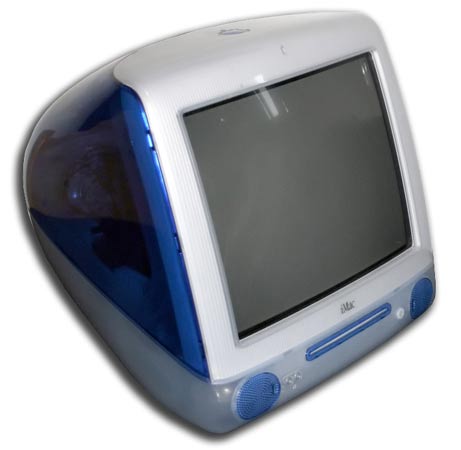
From the first time I saw an iMac in my elementary school’s library, I’ve had a tortured relationship with Apple.  Although I’m not a coder or a computer science expert, I’ve always felt a connection to the culture of remixing, open-source, free-software, etc. (I think a lot of my attitudes towards the internet were shaped by my introduction to Napster in the late 90s and torrents in the mid-2000s.  I love that shit).  But in my mind, Apple products always seemed to be one step behind the technology of the times.  And even worse, I’d always felt that Apple products inhibited innovation in the field of computing.  Computers and the internet developed so quickly in the 20th century partly because the tools of computing were concentrated in universities and among people whose inherent curiosity allowed them to continually push the boundaries of computing.  People began using computers for millions of different purposes simply because programmers had the ability and the freedom to tinker around.  Over the last 15 years, it always appeared to me that Apple products restricted the freedom of their users, thus restricting the ability of people to innovate and expand the bounds of what is possible in computing.  In fact, that constricting nature of Apple products, and the slow release of new technologies, almost seemed to be its defining characteristic.


The iTunes Store

One of Apple’s first major developments in the 21st century was their opening of the iTunes Store.  After years of legal battles regarding music downloads and the internet, Apple finally created a location where people could easily buy music for their computers and iPods.  But along with this wonderful new store came something called FairPlay, a digital rights management (DRM) technology that restricted how songs from the iTunes store could be played.  Among the limitations, the tracks could only be played on three different computers, any iPod could not have music from more than five iTunes accounts, and a playlist containing DRM songs could only be burned to CD seven times.  Most notably, songs purchased from the iTunes store could not be played any portable digital music player besides ones made by Apple.  Essentially, if you buy music from the iTunes store, you have to buy an iPod.  After huge social backlash against DRM music over the years, Apple finally released their music DRM-free starting in 2009.


The MacBook Revolution

Around this same time, MacBook laptops produced by Apple began sweeping the nation.  Although dozens of companies were producing laptops in the market at that time, Apple’s laptops had one curious characteristic: proprietary ports.  At a time when power cords had the possibility for standardization (as has been occurring lately with micro-USB devices), Apple used a proprietary connection on its power adapters.  Additionally, they used a proprietary video out connection so that, if anyone wanted to connect their laptops to a TV or projector, they would have to buy a $30 adapter.  These restrictions necessarily made Apple computers much less versatile.  The same attitude towards hardware was applied to iPods and iPhones, which charge and sync using a proprietary Apple port.


There’s an app for that…

Apple instantly became one of the most dominant competitors in mobile computing when they released the iPhone.  But in doing so, they also charted the path of their mobile operating systems: closed, proprietary, and full of various forms of DRM.  The Electronic Frontier Foundation, Johnathan Zittrain, and the Free Software Foundation have all publicly commented on the restricting nature of Apple’s mobile operating system.  But what exactly was the problem?

First, the iOS operating system itself is completely closed.  This means that no ordinary computer enthusiasts would be able to easily tinker around with the way the operating system works or looks.  In fact, when jailbreaking became common, Apple immediately went to the courts to attempt to make jailbreaking illegal (a battle they eventually lost).  In addition to closed software, the customization ability of iPhones and iPads were surprisingly limited.  There are no custom ringtones for receiving text messages.  There aren’t any widgets to customize your home screen.  Every iPhone looks and feels exactly the same.  The code prevents customization.

After the iPhone, Apple eventually released the App Store – the one and only location where iPhone users could go to obtain applications for their device.  But Apple decided to retain control over every application that was submitted to the App Store.  Eventually, they decided to start rejecting any applications that would conflict with their ability to make money.  Want to turn your phone into a wifi router for free?  Sorry, you’ll have to pay AT&T or Verizon at least $20 a month for that.  Want to access all of your music for free using Google Music?  Sorry, you need to buy all your music from the iTunes store and pay for “iCloud” to listen to it wirelessly.

In addition, Apple habitually delays the release of new technologies to make sure they can maximize their profits at every step.  One of the most egregious examples of this occurred when they released the “iPod Photo” for $500 and then released the first video iPod just four months later at a much lower price.  They released the iPad 2 two months after Christmas 2010 to maximize the number of people who bought the older technology.  Even the new iPhone 4GS that came out a few days ago still does not have 4G data (the network of the future) or an NFC chip (a technology of the future).  This slow, deliberate release of new technologies impedes development within and beyond the existing frameworks.


Apple’s Legacy

So what does this all mean?  Does this mean that Apple products have slowed down technological progress over the last 10 years?  Would the (technological) world be a better place without Apple?

Absolutely not.

If Apple devices were the only devices that you could buy, then, I would probably argue that computing and innovation would probably be hindered.  But because we have other platforms onto which coders and programmers can develop their ideas, Apple hasn’t slowed down technological progress, they’ve advanced it.

How?  Apple’s incredibly simple interface, eye-catching designs, and ridiculously effective marketing have had an unbelievable effect in bringing outsiders into the world of computers.  There was a time when the internet was pretty much just for dorks, researchers, gamers, and porn enthusiasts.  Although computing for business is one of the main reasons for its growth, Apple has brought computing into homes of everyday Americans that ordinarily would never have become involved with computers.

Apple doesn’t sell products, it sells emotion.  Ever since those original dancing silhouette iPod commercials, Apple has been making people believe their identities are tied to the devices they buy.  You can’t appreciate literature without an iPad.  You can’t preserve family memories without iMovie on a Macbook.  And I think that is the greatest legacy of Steve Jobs.  He may not have been an innovator from a technical perspective, but he was a visionary from a cultural perspective.  For people who ordinarily may never have been able to use computers, Jobs designed products they could easily use.  This has brought so many people into the field of computing that it has necessarily advanced the field, albeit in a nontraditional sense.  Sure, Apple app developers are much more restricted than Android app developers, but the sheer number of people who have begun developing apps due to the popularity of Apple has absolutely increased people’s interest in mobile computing.  They may have been on the wrong side of many legal battles involving DRM, but Steve Jobs will forever be remembered as a cultural icon: someone who created a seemingly magical brand of devices that have come to define how our society interacts with the world around it.

Where is Yale’s Zuckerberg? – by “Keila Fong”

Facebook is worth tens of billions of dollars. If its active users formed a country, it would be the third most populous in the world. The dramatized story of its founding (The Social Network, 2010), in which Harvard plays a significant role, was a critical and box-office hit.

According to a Kauffman Foundation study, “if the active companies founded by MIT graduates formed an independent nation, conservative estimates indicate that their revenues would make that nation at least the seventeenth-largest economy in the world.”

Certainly, these types of statistics are mostly just attention-grabbing ledes — they can’t and don’t really capture the state of an institution’s entrepreneurial culture. That being said, it’s unlikely you would hear similar stats about Yale being thrown around…

Make no mistake, Yale has had a number of entrepreneurial successes. FedEx (Fred Smith, ‘66), Meebo (Seth Sternberg, ‘01), Higher One (Sean Glass, ‘03), Justin.tv (Justin Kan, ‘05), and Aardvark (Max Ventilla ’06 et al.) are just a few of the companies that have been founded by Yale alumni. There are Yalies in important places in industry (e.g., the founders of General Assembly. Bing Gordon, of Kleiner Perkins). There are even more fledgling ventures on campus, in programs like the YEI Summer Fellowship. Four of the twenty four Thiel “20 Under 20” Fellows were from Yale.

However, despite these individual successes, Yale just doesn’t have the cultural clout of the entrepreneurial powerhouses — places like MIT, Stanford, perhaps even Harvard. Why not? What does it take to build an entrepreneurial culture?


Where do entrepreneurs come from?

In an opinion piece on the technology and startup blog TechCrunch, Vivek Wadhwa discusses whether entrepreneurs are born or made. He cites Fred Wilson, a prominent VC, who believes that “you can’t teach people to be entrepreneurs”. Wadhwa claims the opposite — that entrepreneurs aren’t born, but are made.

On an anecdotal level, many words have been blogged about what makes a successful entrepreneur. The characteristics seem to converge onto several recurring traits — things like determination, resourcefulness, and creativity, things that all sound pretty useful to have if you’re starting a company. Even if possessing these traits somehow didn’t predispose one to entrepreneurial success, these are the traits that the gatekeepers themselves profess to care about. By selecting founders with these traits, VCs and their ilk create a system in which possessing these traits is rewarded. Perhaps some people are born with a temperament that makes them more likely to be successful in entrepreneurial pursuits.

However, there are clearly more people who exhibit these types of characteristics than the number that pursue entrepreneurship, let alone pursue it successfully. People can be exposed to entrepreneurship, and through education, be given the tools to increase their chances of success — in this sense, potential entrepreneurs can be made into successful entrepreneurs. Not everyone given these resources will magically become a successful entrepreneurs; not everyone can or wants to be made into an entrepreneur.

Entrepreneurs are neither exclusively born nor made — perhaps more accurately, they are activated.


Entrepreneurial culture and communities

Brad Feld reminisces on his blog about his bright college years at MIT — specifically, about his experiences as a frat bro.

Clearly, it was a frat… But as he points out, it also spawned an incredible amount of innovation — the founders of iRobot, ATG, Bluefin Robotics, Harmonix, and VCs at Menlo and Accel, to name a few. As Feld describes it, “there was something in the water” (or perhaps, in the foam).

This culture isn’t unique to an MIT frathouse. The hope is that aspects of this community and its culture can be replicated, thus activating more entrepreneurs.

So, what are some significant characteristics of environments that effectively activate entrepreneurs?

  • Network (geographic and knowledge networks). Geographically, startups congregate in places like Silicon Valley, New York, and Boston. Sociological researchsupports this strategy — “network support increases the probability of survival and growth of newly founded businesses”. A study on the geographic localization of innovation found that “small firms are tied into regional knowledge networks to a greater extent than large firms”. For a small firm, then, it makes sense to tap into the densest and most extensive knowledge network possible — which, practically speaking, tends to mean moving to an entrepreneurial hub.Unlike schools like Stanford (Silicon Valley), MIT and Harvard (Boston), Yale doesn’t have the advantage of a strong local culture of innovation and industry, and the accompanying network. Among the Yale success stories, few have chosen to stay in New Haven, choosing instead to relocate to one of the startup hubs. This dearth also makes it more difficult to pursue entrepreneurship while a student at Yale — it’s inconvenient to be located where many of the resources aren’t.
  • Education. Help predisposed individuals recognize an interest in entrepreneurship. The few in-classroom opportunities (at least within Yale College) to learn and practice entrepreneurship on campus have been incredibly oversubscribed — Sean Glass’ Technology Entrepreneurship seminar had 130+ applicants for fewer than twenty spots. The Hack Yale initiative had hundreds of people register for the course, and even more indicate interest. Rather than balk at the more preprofessional nature of these courses, Yale should recognize that entrepreneurship is not out to destroy the liberal arts education. Rather, offer these types of initiatives the institutional support they deserve.
  • Domain knowledge. It’s no coincidence that many of the entrepreneurial powerhouses are also technology powerhouses. Technological innovation drives entrepreneurial innovation. Let’s be honest, Yale isn’t exactly known as a tech powerhouse, either. Until the on-campus culture of technologists reaches a critical mass, Yale’s wantrepreneurs will all still be looking for technical co-founders, not shipping product.


So where is Yale’s Zuck?

If I knew the answer to that question, I would be on my way to a nice sum of money and a cameo in a David Fincher movie. What I can postulate, though, is that the likelihood of producing a Zuckerberg — by which I really mean the likelihood of producing ventures, specifically successful ones — is positively correlated with the strength of an institution’s entrepreneurial culture. A strong culture will attract entrepreneurially-minded innovators. It will also activate potential entrepreneurs who are already there.

It’s not that Yale inherently lacks the ability to produce the next Zuckerberg. There are plenty of smart people here. There are institutional resources. But when it comes to the key factors in creating an environment that activates entrepreneurs, we’re still playing catch-up. The current spike in activity on campus is encouraging. The next step, though, is to convert the interest into something shippable.


The Customer Is Always Right – by “Vishal M”

404market: a market for markets
Xzibit on 404market, a market for markets

Just about 48 hours ago, two Thiel Fellows — a Yale undergrad on leave-of-absence and a recent ASU grad — launched a site that they hope will change the way startups listen to the market. The site, called 404market, aims to eliminate (or at least seriously diminish) the risk of startups developing products people won’t use, by allowing its users to express monetary demand for products and services that are wanted but don’t exist.

The model works like this: if somebody has an idea for something they really want , they post a “404” expressing that wish, and they also make an “offer” expressing how much they would pay for that thing. Once the 404 is posted, other 404market users can view the 404 and make their own bids on the product or service to express demand to potential suppliers. Once enough demand ($$$) has been aggregated, somebody with the ability to provide that product or service will agree to supply it. After customers have committed money to buy the product or service immediately upon its completion, 404market will monitor the transaction to ensure that the product is satisfactorily made according to the criteria specified by the customers-to-be, and by the end of the transaction, supply has arisen to meet the demand, the suppliers have made some money, and everyone is happy. The types of products and services on the site vary immensely — some people are looking for mobile apps or custom-made software for PC/Mac, while Paul Gu, the Yalie co-founder, is already in the negotiation process with Ivy Noodle to have them add Steamed Juicy Pork Buns to their menu, given sufficient demand.

The Price of an Idea, the Price of a Market

What is the market price of an idea? If you were to try to sell an idea, and nothing else, how much money would you be able to put in your pocket at the end of the day? Paul Graham, co-founder of Y Combinator and all-around startup guru, makes a convincing argument that oftentimes an idea for a startup alone, if not worthless, is not far from it.

A lot of would-be startup founders think the key to the whole process is the initial idea, and from that point all you have to do is execute. Venture capitalists know better. If you go to VC firms with a brilliant idea that you’ll tell them about if they sign a nondisclosure agreement, most will tell you to get lost. That shows how much a mere idea is worth. The market price is less than the inconvenience of signing an NDA. (source)

But what about the price of a market? If you could give somebody not only an idea, but also a market ready to adopt the product that comes from that idea — a market that will pay money for the product the moment it is created, with a predetermined and pre-disclosed bottom line for sales volume and price — how much would that be worth? Certainly not zero, but it’s hard to say much beyond that. That’s why I’m very curious to see how 404market turns out. There are, of course, other companies that operate under a related model, where a critical mass of customers is needed to tip a deal — two obvious examples that come to mind are Groupon and Kickstarter — but these still operate in specific domains (in this case, group discounts and group project-funding), and are not, in their simplest form, markets for pure demand.

Customer Development and Business Model Generation

One methodology espoused by many entrepreneurs today, which is very much in line with the idea of listening to the market and identifying demand before creating supply, is adherence to the model of customer development. Customer development, a term coined by author and retired serial entrepreneur Steve Blank, is seen as the cure for the ailment that he believes most startups die from: they build a product that nobody wants to buy. He’s written a full book on the topic, called The Four Steps to the Epiphany, so if you want to learn about customer development in real depth you should read it, but for now I’ll give you a brief run-down.

1) The product development model is broken

The emphasis in this model is on the first ship. Marketing and sales money is spent early on, and the product is perfected and branded before it’s released. This opens up the possibility of a huge problem: if customers aren’t into the product, by the time it’s shipped, it’s too late. Money is burned, and future iterations of the product are costly.

2) Customer development is the solution

Instead of focusing on product development as the main driving force of the startup, focus on building a customer base. Using these four steps (customer discovery, customer validation, customer creation, and finally company building), company is able to iterate quickly and cheaply, adapt to proven demand from potential customers, offset sales and marketing costs until later in the game, and, perhaps most importantly, if the startup is going to fail, it will fail quickly.

[video] [slides]

This past summer, I had the opportunity to sit in on a talk that was co-led by Steve Blank and Alexander Osterwalder. Alexander offers a complementary methodology to Steve’s customer development: Business Model Generation. Again, there is a full book on the topic, but the key takeaway is the chart seen again and again throughout the book, which helps entrepreneurs break down their business model piece by piece. You can see how answering the questions implicit in this chart would be made immensely easier using Steve Blank’s approach of customer development; without listening to the market, the information in this chart would be little more than guesswork:

Alexander Osterwalder's Business Model Canvas

Take special note of the fields “Value Proposition”, “Customer Segments”, “Revenue Streams”, and “Customer Relationships”. It’s hard to imagine how these could be completed accurately without a very deep understanding of the potential customer base, their needs, and, most importantly, their willingness to pay for your product. If the answers don’t lead to encouraging revenue projections, perhaps it’s time to try building a different product.

The Takeaway

At the end of the day, without customers, there is no business. No matter how much venture capital you can raise, no matter how smart your team is, no matter how brilliant your product’s design, the startup will fail without customers willing to pay money for its product. That’s why it’s best to test the waters early on, by listening to customers and finding proven demand for a product or service. Maybe this could be done through surveys and focus groups, or showing wireframes sketched in a notebook to random people in a cafe; maybe it could be done through 404market. But one thing is certain: the customer is always right.


How Important Is Freedom, Really? – by “Dan”

Protector of the Free Software. Image by Victor Powell

Richard Stallman, the leader of the Free Software movement, has sacrificed his life to fighting for open-source code and our right to modify existing software. But should we sacrifice as well?


Since he left his position at MIT in 1983,  Richard Stallman has devoted his life to the rights of individual creators and programmers. He singlehandedly created the Free Software Foundation, and went on to write a number of high quality system utilities for Unix and Unix-like operating systems. Most importantly, he created a movement that changed the face of software copyright and distribution. Today, that movement is thriving, with a plethora of codebases for many different problem domains publicly available, free for any use under the GPL.


This past summer, I experienced firsthand the possibilities of an open-source world. I worked on an Apache Foundation software project, Hadoop, licensed under the Apache License, which the FSF views as compatible with their own GPL. Because of this license, and the spirit of free software prevalent in the marketplace, I was able to view the source code of the project that forms the backbone of products and services offered by such software giants as Yahoo!, Facebook, Amazon, Apple, eBay, HP, IBM, LinkedIn, Netflix, The New York Times, and Twitter. Perhaps more importantly, the code that I implemented may someday become part of the software that these companies, and any other interested parties, use. It is easy to imagine an alternate situation where each of these companies maintain similar, proprietary solutions to the same problem (scalable, distributed computing in this case). It is because of the philosophy and work of the Free Software Foundation that these companies are able to collaborate so freely, and that I could in turn study and modify their combined efforts. In many situations, the work of the FSF results in software products that are more accessible and just easier to use. But in my experience, this is not always the case.


The GNU site hosts many essays on the philosophical musings and practical recommendations of Stallman and the others at the Free Software Foundation. Looking recently through the list, my attention was directed to an article titled “Is Microsoft the Great Satan?” Despite the exciting title, the essay was not very incendiary. One line stands out, however.

 “…you need to reject all proprietary software, regardless of who developed it or who distributes it.”

This sounds like a great idea, but as I thought about the implications of this clause, I realized just what I would be missing out on if I rejected all proprietary software. I wouldn’t be able to listen to MP3s.

Audacity is one of the most popular digital audio editors available today, with a download rate of over 1 million copies per month. It is written and maintained by The Audacity Team, and is released as free, open-source software. The program allows users to record and import audio files as tracks, and then cut, mix and otherwise modify the tracks to create a single audio file as output. It is designed to be easy to use, yet powerful enough to handle the needs of audio engineering amateurs and prosumers working on a wide variety of projects. Under the terms that Audacity is distributed, that of the GPL, all source code must be freely distributable, without restriction on its subsequent use. According to Section 12 of the GPL, if the conditions on any part of the distributed software contradict the GPL, then the software cannot be distributed at all. It is for this reason that Audacity does not support the MP3 file format.


The MP3 file format, used ubiquitously for sharing and storing songs and other audio tracks, is protected under patent law. The format is the intellectual property of the Fraunhofer Society, the German applied science research organization which invented the standard. In the USA, Canada, the EU, and Japan, among other countries, the patents are enforceable, and through the administration of Thomson Consumer Electronics, the Fraunhofer Society has received royalties and licensing fees for use of the MP3 standard in software and hardware equipment since 1994. In 2005 alone, they received 100 million euros in such fees. When an individual acquires a consumer music product, whether hardware or software, whether free or paid, the producer of the content pays a fee to the original creator of the MP3 standard. Developers who distribute their code as open-source cannot be expected to pay licensing fees for the users of their contributions, and so the GPL expressly prohibits that kind of arrangement. In effect, there cannot be a truly useful music player or editor program released under the GPL, where usefulness is (reasonably) defined to include the handling of MP3 files.

Although Audacity does not come with support for MP3s out of the box, it is designed to work with third-party extensions that provide exactly this functionality. There is even a link to LAME, a popular free MP3 encoder, on the dialog box that informs the user that MP3 output is not supported. But use of this workaround violates the Free Software Foundation’s call to “reject all proprietary software”, as LAME or any other encoder used will be protected by a proprietary license. By clicking the link, you propagate the control of software by restrictive contracts and submit to the authority of an outside owner who retains complete control over the software and any modification of it.

Downloading LAME may violate the spirit of the FSF, but that doesn’t make it a bad thing to do. Rejecting all proprietary software can only stifle innovation and put limits on our creative output. While it is conceivable that all individuals would be better off in a world where all software was released under the GPL, in our world today, I am content to use free software when it is convenient and useful, and unafraid to use proprietary software otherwise. For most users, a computer is merely a means to an end, and in this regard, the philosophy of the Free Software Foundation may be alienating and ridiculous to many who hear of it. It is important to separate the ideology and rhetoric from the reality of the situation. Fight for a free tomorrow, but work flexibly within the intellectual property framework in place today.